
REVIEW · MAKKAH AND MADINAH ZIYARAT
Kiswah Factory Tour From Makkah (Mecca)
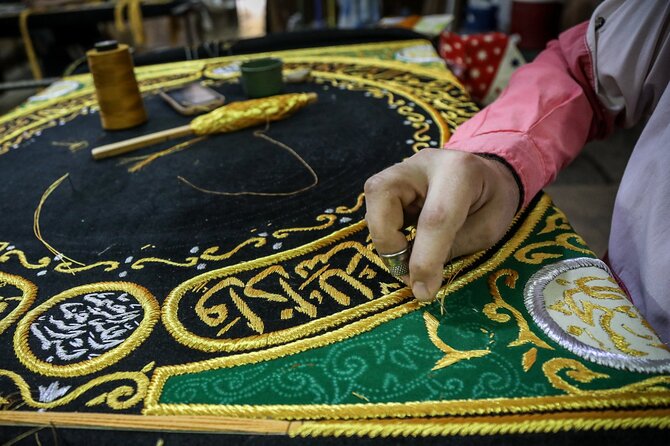
See the cloth before it covers the Kaaba. This private tour pairs the Kiswah Factory, where the Kaaba’s sacred covering is made, with the historic site of Al Hudaibiya outside Makkah. I like the close look at silk weaving, Quranic embroidery, and gold thread work, and I like that the tour adds a major Islamic historical site rather than stopping at the factory alone.
The main consideration is timing. The outing takes about two to three hours including transport, but the pickup time can change with factory visiting hours and driver availability. I would also keep expectations modest about hands-on work, since a personal stitching activity may not always be offered.
In This Review
- Key points to know before booking
- Why this short Makkah outing is worth your time
- At the Kiswah Factory, the craft takes center stage
- What you may and may not do at the factory
- Understanding the Kiswah’s place in Islamic tradition
- Al Hudaibiya recalls a turning point in 628 CE
- The transport arrangement keeps the visit simple
- Who will get the most from this experience
- Practical details that affect your decision
- How this compares with visiting the Grand Mosque alone
- Should you book the Kiswah Factory Tour?
- FAQ
- How long does the Kiswah Factory Tour take?
- What places does the tour visit?
- Is transportation included?
- How much does the tour cost?
- Is the tour private?
- Is admission to the sites included?
- Can I cancel for a full refund?
Key points to know before booking
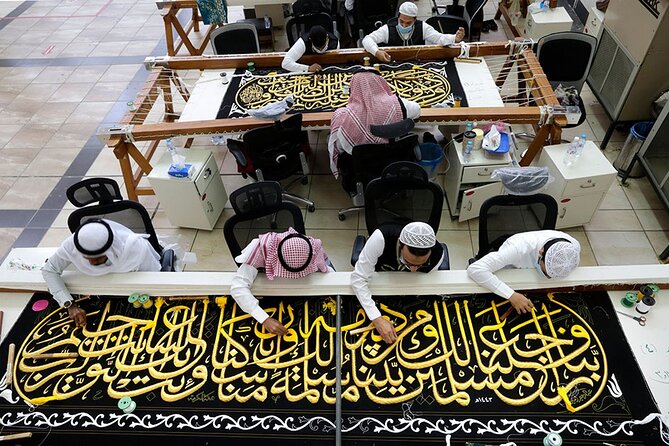
- The Kiswah is made in Makkah: You see how the black silk covering for the Kaaba is designed, woven, embroidered, and prepared for its annual replacement.
- The factory visit lasts about 90 minutes: That gives you time to follow the craft process rather than making a rushed photo stop.
- Hudaybiyyah adds major religious context: The site recalls the 628 CE treaty between the Prophet Muhammad, peace be upon him, and the Quraysh of Makkah.
- Transportation is included: Pickup is offered, and the tour is private for your group of up to four people.
- The $104 price is per group: For four people, that works out to $26 each before personal expenses and gratuity.
- The schedule needs some flexibility: The selected time may be adjusted to match factory hours and the driver’s availability.
Why this short Makkah outing is worth your time
The Kiswah Factory Tour offers something you cannot get by simply looking at the Kaaba from the Grand Mosque. It takes you behind one of Islam’s most recognizable objects and shows the work that goes into making its covering.
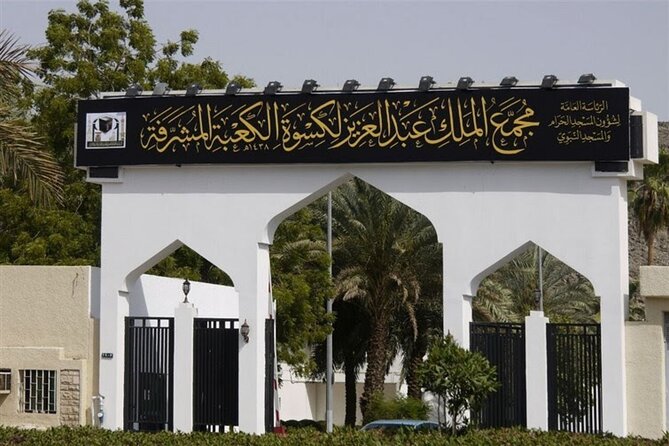
You are not only seeing a finished cloth. You are learning how black silk, embroidered Quranic verses, and metallic thread become a sacred covering with a long tradition behind it. The factory was established in 1927 by King Abdulaziz Al Saud, and it now operates in the Umm Al Joud area, roughly 10 kilometers from the Grand Mosque.
I see this as a good choice for anyone who wants a cultural stop between prayers, pilgrimage duties, or time in Makkah. The tour is also useful for families and small groups because the vehicle and guide are arranged for your party rather than shared with a large crowd.
The outing is not built around entertainment or fast sightseeing. Its appeal comes from careful workmanship, religious meaning, and the chance to connect a familiar symbol with the people and processes behind it.
More ziyarat visits in Makkah and Madinah:
- Al Madinah: City Sightseeing Hop-On Hop-Off Bus Tour
★ 3.9 · 148 reviews - Madinah Culture & History Tour – Led by Local Guide
★ 5.0 · 74 reviews - From Madinah: Half-Day Ziarah Tour
★ 4.9 · 59 reviews
At the Kiswah Factory, the craft takes center stage
The first stop lasts about one hour and 30 minutes, with admission included. That is the heart of the tour, so I would give it your full attention rather than treating it as a quick stop for photographs.
The Kiswah is the black cloth placed over the Kaaba. It is embroidered with Quranic verses using gold and silver thread, and the covering is replaced every year on the 9th day of Dhul-Hijjah. The annual replacement gives the factory a working purpose, not just a museum role.
Inside, you can expect an explanation of the main stages of production:
- Designing the patterns and inscriptions
- Preparing and dyeing the material
- Weaving the black silk cloth
- Creating the embroidered panels
- Applying gold and silver thread
- Completing the covering for its use at the Kaaba
The factory employs around 200 artisans who work throughout the year. That detail helps you understand the scale of the job. The Kiswah is not produced as one simple textile project. It requires planning, skilled handwork, and repeated attention to fine details.
I especially like that the visit connects technique with faith. You see weaving and embroidery, but you also learn why the finished work matters. The Quranic verses are not decorative patterns added at the end. They form part of the sacred identity of the covering.
What you may and may not do at the factory
A guide accompanies the visit and explains the production process. The guide’s role matters here because the machinery, thread, and fabric can otherwise look like a general textile workshop. With good explanations, you can follow the change from raw materials to a finished section of the Kiswah.
Do not assume that you will be able to stitch part of the cloth yourself. A hands-on personal stitching activity was not available on one tour, so I would treat that as an occasional extra rather than a promised feature.
That is a small but useful expectation to set. The factory’s main value is watching the work and understanding its meaning. If you are hoping for a craft class, this may feel limited. If you want access to the production setting and an explanation of the process, the visit offers much more.
Photography rules, exact workshop access, and the amount of time spent in each area are not specified. I would follow the guide’s instructions and avoid planning the stop around a particular photo or activity.
Understanding the Kiswah’s place in Islamic tradition
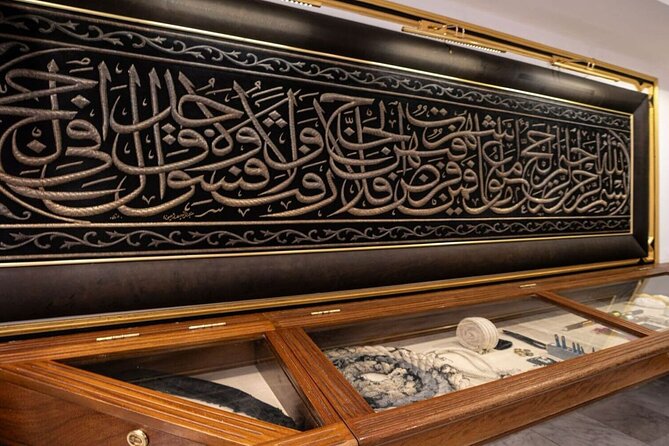
The custom of covering the Kaaba goes back to the pre-Islamic period. The modern factory reflects a long practice while using organized production and specialist artisans.
The cloth’s annual replacement on the 9th of Dhul-Hijjah is an important part of its story. That date falls during the period of Hajj, which makes the Kiswah especially relevant to pilgrims who are already thinking about the Kaaba, sacred places, and the rituals connected with them.
For me, the best part of this stop is the shift in scale. At the Grand Mosque, the Kaaba is the focus of prayer and devotion. At the factory, you see the material object being prepared by human hands. The two settings offer different ways to understand the same sacred symbol.
You should allow the guide’s explanation to shape the visit. This is not a place where a quick walk through tells the whole story. The significance comes from knowing why the cloth is made, what the inscriptions represent, and how much care goes into its construction.
A completely different kind of day:
- Riyadh: Edge Of The World, camels &Stargazing with 4×4
★ 4.7 · 1,050 reviews - Edge of The World Riyadh with Camel Ride ,Bat Cave Visit & Dinner
★ 5.0 · 778 reviews - Edge Of The World Hike(Dinner under stars,village,bats cave,camp)
★ 4.5 · 675 reviews - Edge of the World with 4×4 vehicles, sunset Dinner and stargazing
★ 4.5 · 567 reviews
Al Hudaibiya recalls a turning point in 628 CE
The second stop is Al Houdaibeiah, also written as Hudaybiyyah or Hudaibiya. It lasts about 40 minutes, and admission is free.
This is the location associated with the Treaty of Hudaybiyyah, signed in 628 CE during the sixth year of the Hijrah. The agreement was made between the Prophet Muhammad, peace be upon him, representing the Muslims of Medina, and the Quraysh of Makkah.
The event began with a peaceful journey by the Prophet and about 1,400 companions to perform Umrah. The Quraysh prevented them from entering Makkah, which led to negotiations at Hudaybiyyah. The resulting treaty included a ten-year truce and allowed the Muslims to return the following year to perform Umrah.
The site gives the tour a different rhythm. At the factory, you focus on fine detail and skilled production. At Hudaybiyyah, you are looking at a place linked to negotiation, patience, and a major moment in early Islamic history.
The remains are described as an ancient area for pilgrimage and reflection. Do not expect the same kind of finished attraction as a modern museum. The value comes from the setting and the story connected to it, so the guide’s context is important.
With only about 40 minutes here, you will get an introduction rather than a long archaeological visit. That is enough for a short stop, especially when paired with the factory, but it may feel brief if Hudaybiyyah is your main reason for booking.
The transport arrangement keeps the visit simple
Transportation is included, and pickup is offered. The total duration includes driving, so the two to three hour estimate does not mean two to three full hours at the sites.
The route from Makkah combines the factory in Umm Al Joud with Al Hudaibiya. Since the factory is about 10 kilometers from the Grand Mosque, the trip is practical as a half-day outing rather than a full-day excursion.
The vehicle was described as comfortable and clean on one booking, and snacks were provided. Those details are not guaranteed as formal features, but they suggest the ride may be a pleasant part of the outing. English communication with the driver was also reported as good.
The timing deserves attention. Your chosen departure time may change according to the factory’s visiting hours and the driver’s availability. I would avoid booking this immediately before an important prayer, airport transfer, or fixed appointment.
The tour is private, with only your group taking part. That is a real advantage for a small family or group of friends. You can ask questions without competing with a large party, and the pace may feel more personal.
The maximum group size is four people. At $104 per group, the value improves sharply when four people share the cost:
- One person: $104
- Two people: $52 each
- Three people: about $34.67 each
- Four people: $26 each
Transportation is included, but personal expenses and gratuity are not. Keep those costs separate when you work out your budget.
Who will get the most from this experience
I would recommend this tour most strongly to first-time visitors who want more than the usual Makkah pilgrimage sites. It gives you a practical look at sacred craftsmanship and a short visit to an important site connected with the Prophet’s life.
It also suits:
- Small families who prefer a private vehicle
- Groups of up to four sharing the cost
- Visitors interested in Islamic art and textile work
- Pilgrims who want historical context alongside religious visits
- People with only a few free hours in Makkah
- Anyone who prefers a guide to explain what they are seeing
The tour may be less suitable if you want a long archaeological visit, a flexible all-day schedule, or a guaranteed hands-on craft session. The factory is the main attraction, while Hudaybiyyah is a shorter stop.
I would also think about your energy levels. Pilgrimage can be tiring, and this outing still includes transport and two separate stops. The short duration helps, but you should choose a time that does not compete with essential religious plans.
Practical details that affect your decision
Confirmation is provided at the time of booking, and a mobile ticket is available. The tour is near public transportation, although transportation is already included if you use the pickup option.
Most people can take part. No special fitness requirement is stated, but the tour involves moving through a factory and visiting an outdoor historic site. If you have particular mobility needs, check the arrangements before paying because detailed accessibility information is not provided.
The experience can be canceled for a full refund up to 24 hours before its start time. Cancellations made less than 24 hours in advance are not refunded, and changes inside that window are not accepted.
Because the tour is often booked well ahead, planning early is sensible. The average booking point is about 28 days before the visit. That does not mean you must reserve a month ahead, but it suggests that popular dates may need advance planning.
How this compares with visiting the Grand Mosque alone
A visit to the Grand Mosque brings you directly to the Kaaba and remains the central religious experience in Makkah. The factory cannot replace that. It offers a different kind of understanding.
At the mosque, you encounter the Kiswah as part of the sacred setting. At the factory, you see the material, construction, inscriptions, and labor behind it. I like the combination because it connects worship with the people who produce the cloth.
Hudaybiyyah adds another layer. It moves your attention from an object to an event, and from craftsmanship to the choices made during a difficult negotiation. The result is a compact tour with three useful angles: faith, skilled work, and Islamic history.
If you have already visited major religious sites and want a quieter cultural outing, the factory may be the stronger reason to book. If your schedule is extremely tight, you may decide that time near the Grand Mosque matters more.
Should you book the Kiswah Factory Tour?
I would book this tour if you are in Makkah for several days, can share the $104 group price, and want a guided look at an important part of Islamic tradition. The Kiswah Factory is the clear highlight, especially for anyone interested in embroidery, textiles, or the practical work behind sacred objects.
Book with flexible timing. The factory hours and driver availability can affect the departure, and the tour’s full duration includes transport. I would also view the personal stitching activity as a bonus, not a guarantee.
Skip it if you need a tightly fixed schedule, want a long visit at Hudaybiyyah, or are looking for a hands-on workshop. For the right visitor, though, this is a thoughtful half-day addition to time in Makkah, with private transport, a guide, and a strong connection to Islamic faith and craft.
FAQ
How long does the Kiswah Factory Tour take?
The full tour takes approximately two to three hours, including transportation. The factory visit lasts about one hour and 30 minutes, while the Al Hudaibiya stop lasts about 40 minutes.
What places does the tour visit?
The tour visits the Kiswah Factory of the Holy Kaaba in the Umm Al Joud area and the historic Al Hudaibiya, also known as Hudaybiyyah or Hudaibiya.
Is transportation included?
Yes. Transportation is included, and pickup is offered.
How much does the tour cost?
The price is $104 per group of up to four people. Personal expenses and gratuity are not included.
Is the tour private?
Yes. This is a private activity, so only your group participates. The maximum group size is four people.
Is admission to the sites included?
Admission to the Kiswah Factory is included. Admission to Al Hudaibiya is free.
Can I cancel for a full refund?
Yes. You can cancel at least 24 hours before the experience start time for a full refund. Cancellations or changes made less than 24 hours before the start time are not accepted for a refund.
Just added in Saudi Arabia
- Wadi Lajab Canyon Hiking Tour★ 5.0 · 2 reviews
- Uncover the Rich Heritage of Diriyah, the city of Earth.★ 5.0 · 1 review
- Wadi Disah Adventure (from Tabuk)★ 5.0 · 1 review
- Discover Taif City★ 5.0 · 4 reviews
- Full day Jabal Al Lawz with Biblical Sites visit★ 5.0 · 2 reviews
- Historical Landmark in Tabuk Region Full Day Tour★ 5.0 · 2 reviews
- The Amazing Asfar Lake at Al Ahsa Desert★ 5.0 · 1 review
- Visit Taif The City of Roses★ 5.0 · 2 reviews
Makkah and Madinah Ziyarat, compared.
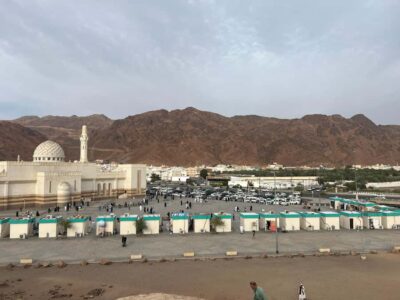
Madinah Culture & History Tour – Led by Local Guide
Read our review →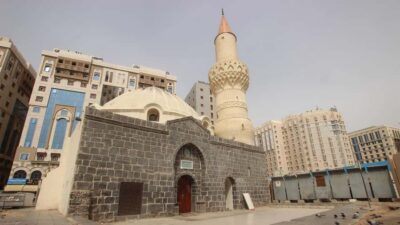
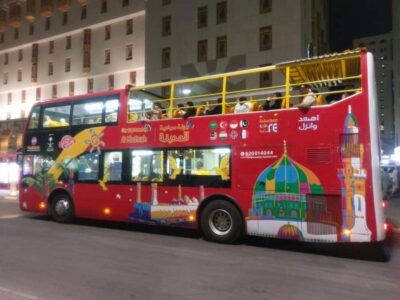
City Sightseeing Al Madinah Hop-On Hop-Off Bus Tour
Read our review →
Jabal Al-Nour, Cave Hira, and Mount Arafat Tour
Read our review →
Browse the lists this tour appears in