
REVIEW · DIRIYAH AND OLD RIYADH
Uncover the Rich Heritage of Diriyah, the city of Earth.
Saudi Arabia’s story begins in mudbrick. Just northwest of Riyadh, Diriyah brings the Kingdom’s early political and cultural life into view through At-Turaif, a UNESCO World Heritage site, and the polished dining quarter of Bujairi Terrace. I like the small group size, limited to 10 people, and the chance to explore with a guide in Arabic, English, or Japanese. The main consideration is timing: the activity is advertised as two hours, while the listed stops suggest closer to three hours, so confirm the schedule before booking.
I also like the meeting point at Bujairi Terrace, which makes the tour easy to find and gives you a comfortable place to begin or end. Saad received especially warm praise for his guiding on a November 2024 visit, a useful sign for anyone hoping for a personal introduction rather than a quick walk past old walls. At $150 per person, this is not a bargain outing, and transport from elsewhere in Riyadh costs extra.
In This Review
- Key points to know before booking
- Why Diriyah matters to Saudi Arabia
- Beginning at Bujairi Terrace
- Walking through At-Turaif’s mudbrick streets
- Museums, architecture, and the Najdi style
- Returning to Bujairi Terrace for food and free time
- Wadi Hanifah and Diriyah’s wider setting
- Is $150 per person good value?
- Timing, comfort, and practical planning
- Who will enjoy this Diriyah experience?
- Should you book the Diriyah tour?
- FAQ
- Where does the Diriyah tour meet?
- How long does the tour last?
- What is the price?
- Is transportation included?
- What languages are available?
- How large is the group?
- Is the tour wheelchair accessible?
- What should I bring?
- Can I cancel the booking?
Key points to know before booking
- At-Turaif tells the story of the First Saudi State: The mudbrick district served as the capital of the Emirate of Diriyah from 1727 to 1818.
- Bujairi Terrace adds modern comfort: You can pair historic sights with restaurants, shops, cultural events, and free time.
- The group is capped at 10 people: That should make it easier to ask questions and keep close to the guide.
- The listed timing needs clarification: The headline says two hours, while the detailed schedule adds up to roughly three hours.
- Languages include Arabic, English, and Japanese: Check availability for your preferred language when choosing a start time.
- Comfort matters: Expect walking, strong sun, and time on uneven historic ground, so bring sturdy shoes, water, sun protection, and a charged phone.
Why Diriyah matters to Saudi Arabia
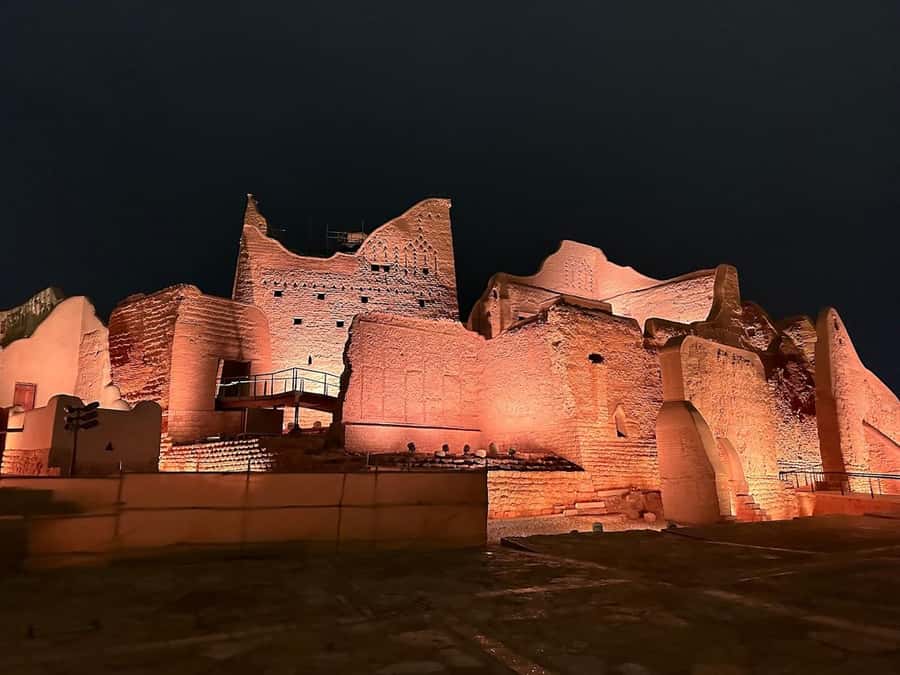
Diriyah was founded in 1446 on the banks of Wadi Hanifah. Centuries later, it became the capital of the First Saudi State, making it one of the key places to understand the origins of modern Saudi Arabia.
That context gives the tour more weight than a simple old-town stroll. At-Turaif is not just a collection of restored walls. It was a seat of government, a residential district, and a center of religious and political life. As you move through the area, the scale of the old settlement helps you picture how power was organized before the modern city of Riyadh took shape.
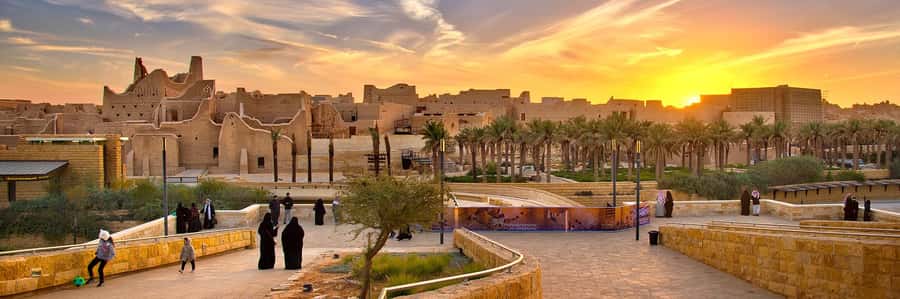
The setting also matters. Diriyah overlooks Wadi Hanifah and the Diriyah oasis, a natural corridor that helped support settlement in this dry part of the Arabian Peninsula. You are seeing architecture shaped by climate, local materials, and practical needs rather than imported decoration.
Your guide’s job is important here. Mudbrick buildings can look similar at first glance, but the right explanation helps you notice how the city was planned and why the Najdi style developed as it did. A small group gives you a better chance to stop, ask questions, and hear the answer without being lost at the back.
More History Tours in Riyadh
- Red Sand Adventure 4×4 (Camel Ride ,Quad Biking, Heritage House)
★ 5.0 · 135 reviews - Red Sand Adventure Riyadh (Quad Biking,Camel Ride,Heritage)
★ 4.6 · 19 reviews - Red Sand Dunes Tour with Camel Ride ,Quad Biking, Heritage House
★ 4.0 · 16 reviews
Beginning at Bujairi Terrace
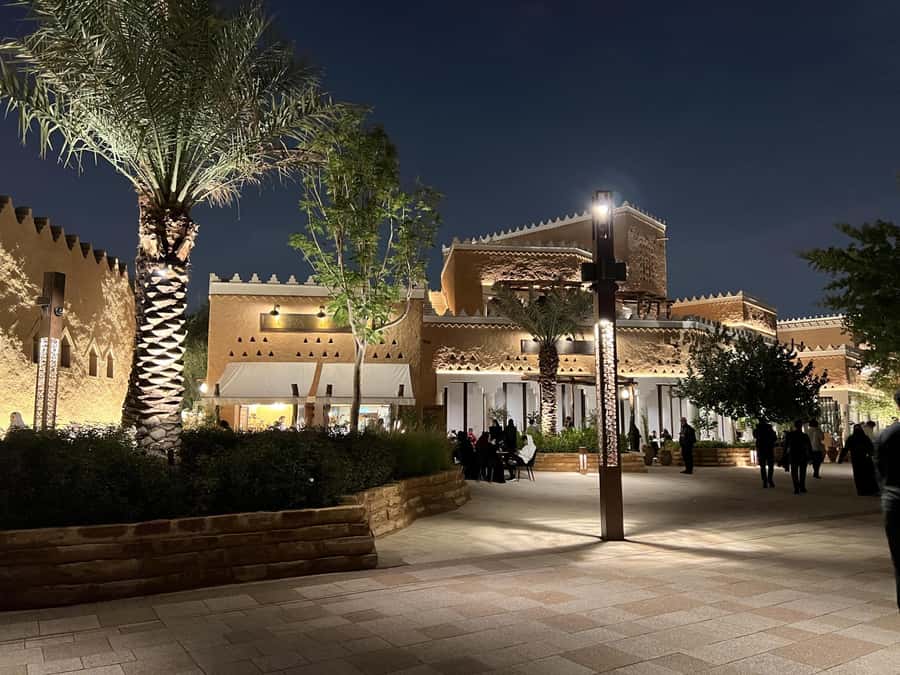
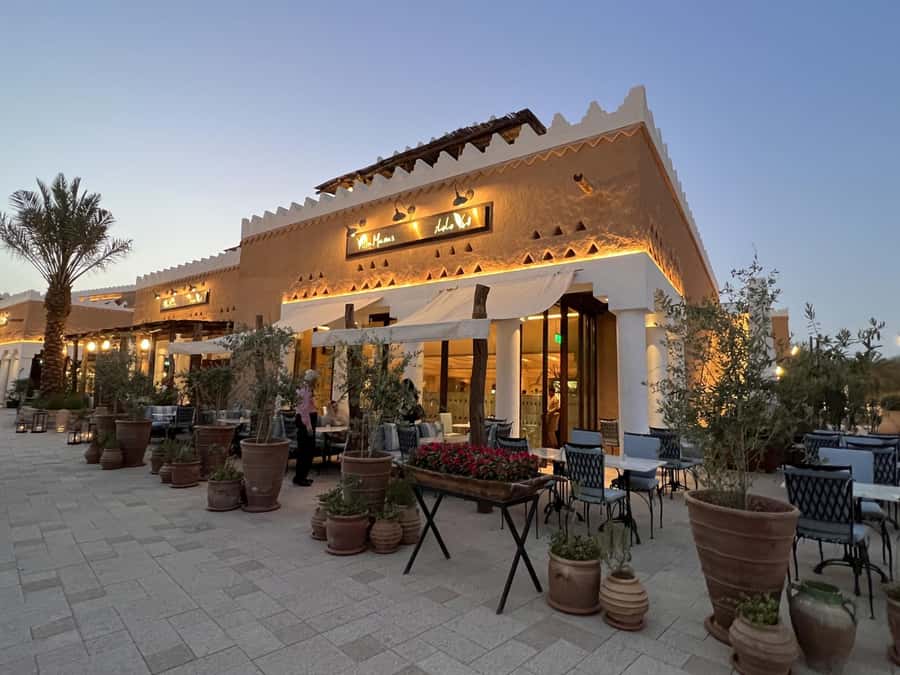
The meeting point is the main entrance to Bujairi Terrace at 3205 King Faisal Road. This is a useful starting point because the area is designed for visitors and offers a clear transition between present-day Diriyah and the historic quarter.
The first scheduled portion lasts about 20 minutes and includes a guided walk and sightseeing. Bujairi Terrace is more than a place to wait for the tour. It brings together restaurants, cultural activities, heritage features, shopping, and open spaces, giving you a sense of how Diriyah is being presented as a major cultural destination.
I would arrive early enough to find the main entrance without rushing. The supplied information does not specify parking or exact arrival instructions beyond the meeting point, so transport planning is your responsibility. If you need pickup or drop-off from another Riyadh location, it can be arranged for an additional fee. Transportation to other locations is not included.
Bujairi Terrace is also a good place to return after the historic walk. The contrast is part of the appeal: you can study old mudbrick construction, then sit down for a meal or browse the modern cultural quarter. Some visitors may find the polished setting less old-world than At-Turaif, but it adds practical comfort to a tour that involves time outdoors.
Walking through At-Turaif’s mudbrick streets
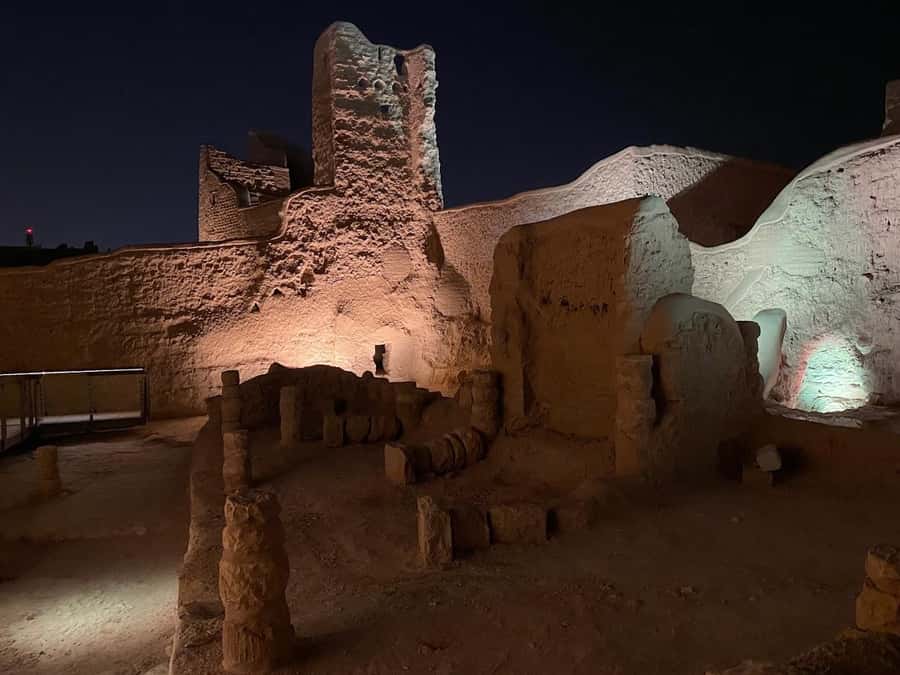
The main portion of the experience is a two-hour guided visit to At-Turaif, including sightseeing and walking. This is where the tour earns its place on a Riyadh itinerary.
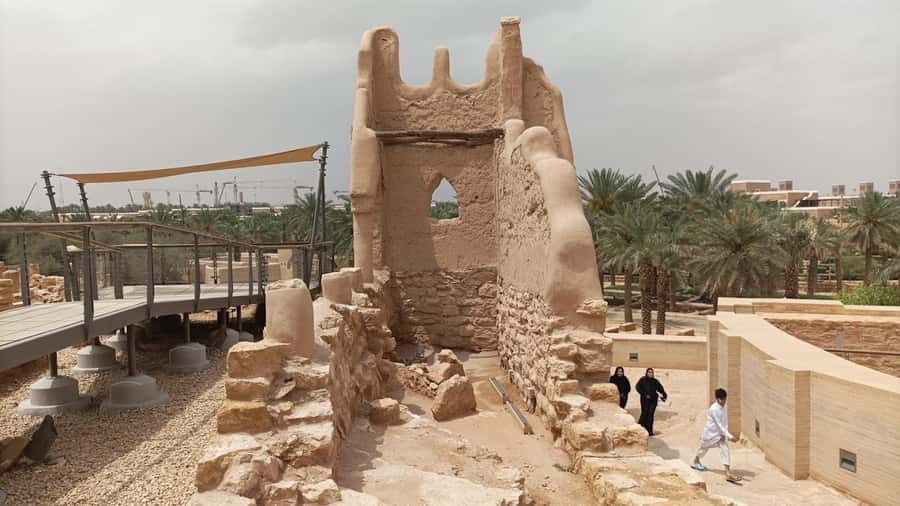
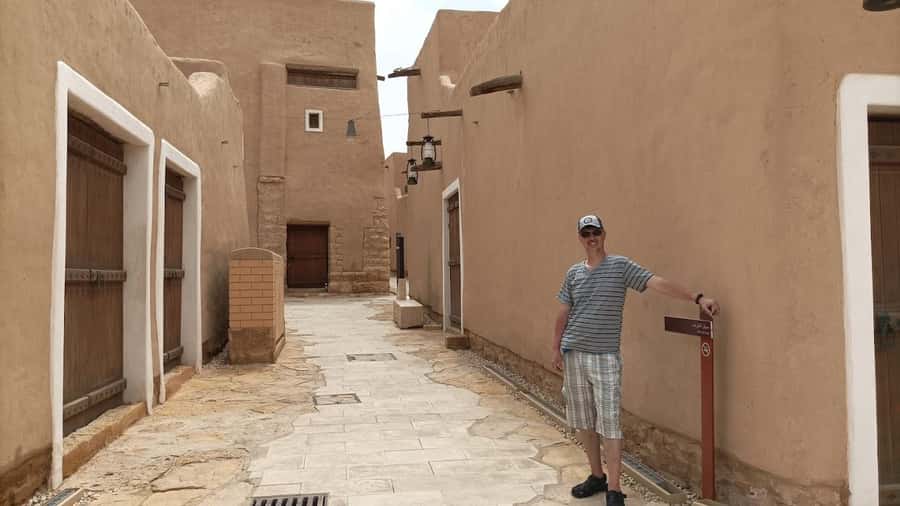
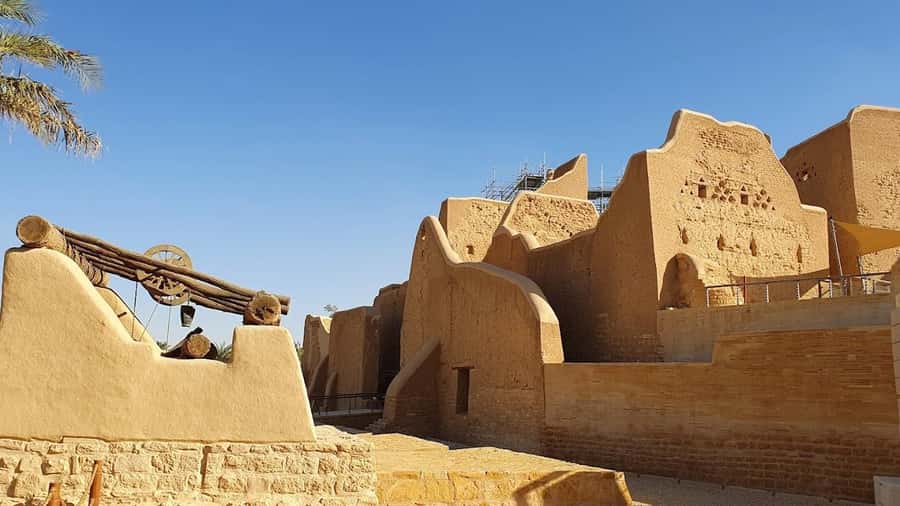
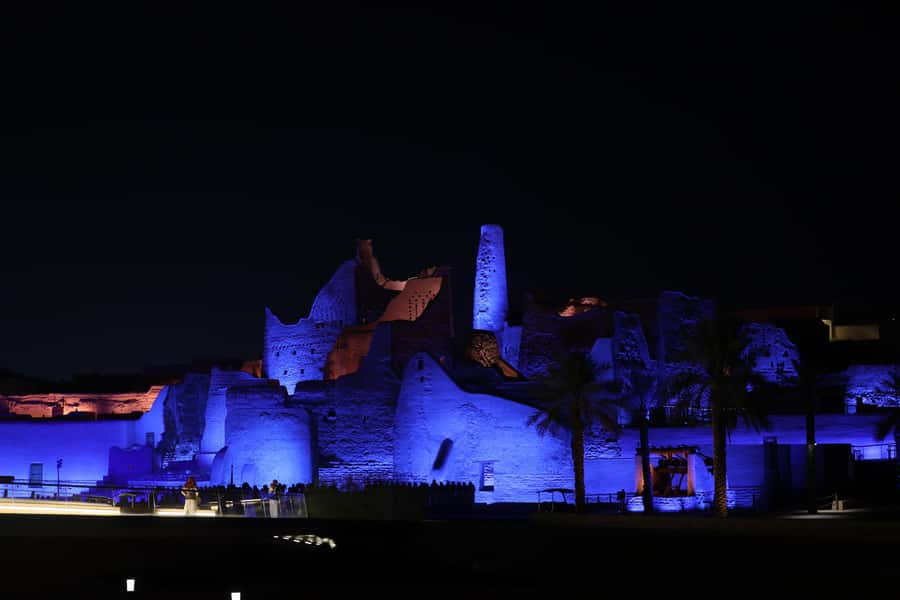
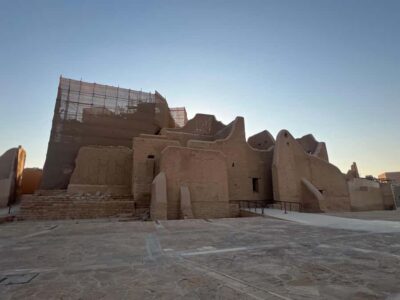
At-Turaif was recognized by UNESCO in 2010 for its historical and architectural importance. Its buildings use the mudbrick construction associated with Najdi design, with forms shaped by the heat, available materials, and local building traditions. The architecture has an earthy color and strong, simple lines. Look for the way walls, towers, and courtyards work together rather than treating each building as an isolated monument.
The district’s historic role as the capital of the First Saudi State gives the visit a clear story. From 1727 to 1818, Diriyah was the center of that state. Your guide can help connect the remaining structures to the political history of the period, turning a series of old buildings into a place with purpose and meaning.
The walking pace is likely to be steady, since the schedule allows two hours for this section, but the exact route is not supplied. You should be ready to spend much of the time on your feet. Comfortable walking shoes are essential, and modest, respectful clothing is expected, particularly near religious or culturally sensitive sites.
The heat can shape your experience. Riyadh may be very hot during the day and cooler at night, so check the forecast and dress for the time of your visit. A wide-brimmed hat, sunglasses, sunscreen, and drinking water are sensible additions. Water and refreshments are included, but carrying your own bottle is still useful, especially if you are sensitive to heat.
Wheelchair access is listed, which is helpful, though the information does not describe the exact surfaces or route conditions. If you use a wheelchair, contact the provider before arrival to confirm which parts of At-Turaif are accessible on your chosen visit.
Museums, architecture, and the Najdi style
Museums housed in historic buildings add another layer to the visit. They offer a chance to move beyond exterior walls and learn about the people, objects, and events connected with Diriyah’s past.
The available information does not name each museum or guarantee a particular interior stop on every departure. That is worth keeping in mind if museum access is your main reason for booking. Ask your guide at the start which buildings and exhibitions are open during your visit.
The architectural discussion should be one of the most useful parts of the experience. Diriyah’s old buildings show how local builders created shade, privacy, protection, and ventilation with mudbrick and carefully arranged spaces. You may also hear how older design ideas continue to influence the city’s newer construction.
I like this link between old and new. It keeps the visit from becoming a frozen look at the past. At the same time, the restored areas can feel carefully managed, and you should not expect every corner to look untouched. The value lies in seeing the historic form, understanding its purpose, and considering how Saudi Arabia is presenting this place today.
More Diriyah and old Riyadh trips:
- Al Masmak Fortress, Murabba Palace, and Souq Al Zal Tour
★ 5.0 · 19 reviews - From Riyadh: Diriyah UNESCO Heritage Tour
★ 3.7 · 11 reviews - Riyadh : Diriyah Historic
★ 4.9 · 9 reviews - Riyadh: Masmak Fort, Souq AlZal, and Murabba Palace Tour
★ 4.8 · 7 reviews
Returning to Bujairi Terrace for food and free time
The final scheduled stop returns to Bujairi Terrace for a visit, guided time, shopping, sightseeing, and a walk. The schedule lists 40 minutes, although one part of the supplied timing says 40 hours, clearly an error. Combined with the 20-minute Bujairi visit and two-hour At-Turaif walk, the practical total appears closer to three hours.
This is the relaxed part of the experience. You can look around the terrace, browse shops, and choose from traditional or international restaurants. The tour price does not include meals, so plan to pay separately if you want to eat.
Bujairi Terrace is particularly useful if you want to add a meal before continuing your Riyadh sightseeing. It also gives you a chance to rest after At-Turaif instead of ending the visit immediately after the historic walk. The setting is more contemporary and commercial than the old district, so anyone seeking only untouched heritage may find this section less compelling.
Still, I would not dismiss it as filler. Diriyah is being developed as a cultural destination, and Bujairi Terrace shows the present-day side of that project. The old quarter explains where the city came from. The terrace shows how that identity is being shared with today’s visitors.
Wadi Hanifah and Diriyah’s wider setting
Diriyah’s position beside Wadi Hanifah helps explain why the settlement developed here. The wadi and oasis provided a distinctive natural setting in an otherwise dry region, and the area now includes parks and one of the Kingdom’s larger historical national park spaces.
The tour information refers to the natural setting around Wadi Hanifah, but it does not promise a separate hike or extended park visit. Treat the wadi as part of the view and context unless your guide confirms an additional stop.
This is still useful background. Architecture makes more sense when you see its relationship to the land around it. The wadi helped shape settlement, movement, and agriculture, while the mudbrick buildings reflect local conditions. If the weather is comfortable, take a moment to look beyond the walls and notice how the old city sits within the broader area.
Is $150 per person good value?
At $150 per person, this tour is priced for convenience, guiding, and a small group rather than for a low-cost sightseeing walk. The price includes a local guide, water, refreshments, and the organized visit to the main historic areas. It does not include transport from another location or food at Bujairi Terrace.
The small group limit is a real part of the value. With no more than 10 participants, you should have a better chance of hearing the guide and asking about details that interest you. That matters at a site where context makes the buildings far more meaningful.
The price is easier to justify if you have limited time in Riyadh, want help understanding Saudi Arabia’s early political history, or prefer not to plan the route yourself. It is harder to justify if you already have transportation, have researched At-Turaif closely, and mainly want to walk around independently.
The strong point from the available feedback is the guide. A verified Italian booking from November 23, 2024 gave the experience five out of five and specifically praised Saad, who was described as a great guide. That is only one rating, so I would treat it as encouraging rather than conclusive. Still, a good guide can make the difference between admiring mud walls and understanding why they matter.
Timing, comfort, and practical planning
The duration needs special attention. The activity details state two hours, but the schedule includes 20 minutes at Bujairi Terrace, two hours at At-Turaif, and 40 minutes back at Bujairi Terrace. That totals about three hours. Confirm the actual start and end times before you arrange a meal, airport transfer, or another tour.
The tour is offered with live guides in Arabic, English, and Japanese. Availability may depend on the departure time, so choose carefully if language is important to you.
Dress modestly and respectfully. This is both a cultural courtesy and a practical choice. Light, comfortable clothing, covered shoulders and knees where appropriate, and good walking shoes will serve you well. Bring sunglasses, a sun hat, sunscreen, and a mobile battery pack if you plan to take photographs throughout the visit.
The activity is not suitable for babies under one year or people over 95 years. That does not tell you the exact fitness level required, but the walking time means you should be comfortable spending a substantial part of the tour on your feet.
Free cancellation is available up to 24 hours before the activity for a full refund. You can also reserve now and pay later, which helps if your Riyadh plans are still changing. These policies are useful, but the main booking decision should rest on your interest in history, your tolerance for walking, and the value you place on a guide.
Who will enjoy this Diriyah experience?
I would recommend this tour to first-time visitors to Riyadh who want a clear introduction to Saudi Arabia’s origins. It also suits anyone interested in architecture, UNESCO sites, Najdi building traditions, or the way historic places are being presented alongside modern dining and cultural spaces.
Families with older children may find the mudbrick setting and old streets more engaging with a guide’s stories. The activity is less suitable for very young children, since babies under one year are excluded and the visit involves extended walking.
Independent explorers may prefer to visit without a paid tour, especially if they want to set their own pace. But you give up the historical explanation and the structure of a small group. At-Turaif has more to offer than photographs alone, and the guide is the main reason to pay for this experience.
Should you book the Diriyah tour?
Book it if you want a focused, guided introduction to the birthplace of Saudi Arabia, with time at both At-Turaif and Bujairi Terrace. The combination works well: one stop gives you the historic heart of Diriyah, while the other provides food, shopping, culture, and a comfortable place to pause.
Before paying $150, confirm the true duration, the language of the guide, and any extra pickup cost. If Saad is available, his positive mention gives you a useful name to request, though guide assignments can change.
My call: this is a worthwhile choice for a first Diriyah visit, especially if you value context and a small group. It is not the best fit for a budget-conscious visitor or someone seeking a completely independent walk. Bring sensible shoes, protect yourself from the sun, and leave room in your schedule for the tour to run closer to three hours.
FAQ
Where does the Diriyah tour meet?
The meeting point is the main entrance of Bujairi Terrace at 3205 King Faisal Road.
How long does the tour last?
The activity information states a duration of two hours. The detailed schedule lists 20 minutes at Bujairi Terrace, two hours at At-Turaif, and 40 minutes at Bujairi Terrace, which adds up to about three hours. Confirm the exact timing before booking.
What is the price?
The price is $150 per person.
Is transportation included?
Transportation to other locations is not included. Pickup and drop-off can be arranged for an additional fee.
What languages are available?
Live guides are available in Arabic, English, and Japanese.
How large is the group?
The activity is designed as a small-group tour with no more than 10 participants.
Is the tour wheelchair accessible?
Wheelchair accessibility is listed for the activity. The supplied details do not explain the exact route or surfaces, so contact the provider if you need specific access information for At-Turaif.
What should I bring?
Bring comfortable walking shoes, comfortable clothing, water, sunscreen, sunglasses, a wide-brimmed hat, and a mobile battery pack. Water and refreshments are included, but extra drinking water can still be useful in hot weather.
Can I cancel the booking?
You can cancel up to 24 hours in advance for a full refund. The activity also offers reserve now and pay later booking.
Just added in Riyadh
- Riyadh City tour (Private Tour)★ 5.0 · 2 reviews
- 4X4 Dune Bashing with Sand Boarding in Pyramids of Saudi Arabia★ 5.0 · 1 review
- Full-Day Ancient Mysteries of Central Arabia Tour with Lunch★ 5.0 · 1 review
- Private Transfer to Airport and Hotel in Riyadh★ 5.0 · 2 reviews
- Explore Edge of The World in a Private Trip with Saudi Dinner★ 5.0 · 3 reviews
- Full-Day Ushayger Tour with Lunch from Riyadh★ 4.5 · 4 reviews
- Full-Day Riyadh City Tour with optional lunch★ 5.0 · 2 reviews
- Edge of the World and Huraymila National Park Tour★ 4.5 · 4 reviews
Diriyah and Old Riyadh, compared.
Al Masmak Fortress, Murabba Palace, and Souq Al Zal Tour
Read our review →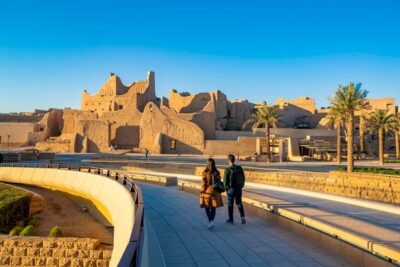
Masmak Fort, Souq AlZal, and Murabba Palace Tour
Read our review →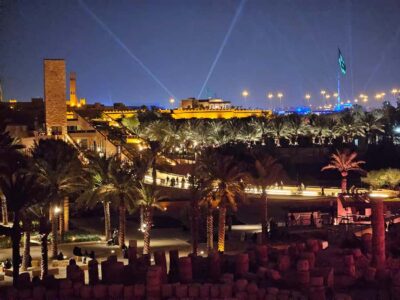
Diriyah, AL Masmak Fortress, AL Murabba Palace Tour
Read our review →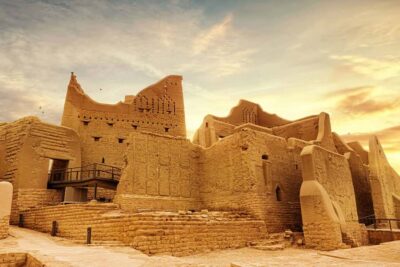
Half Day in Riyadh, Almasmak, National Museum, Kingdom Tower
Read our review →
Al-Diriyah, Al-Masmak, Souq Al-Zal, & Boulevard Tour
Read our review →Browse the lists this tour appears in