
REVIEW · MAKKAH AND MADINAH ZIYARAT
A Spiritual Journey Through the Holy Sites of Makkah
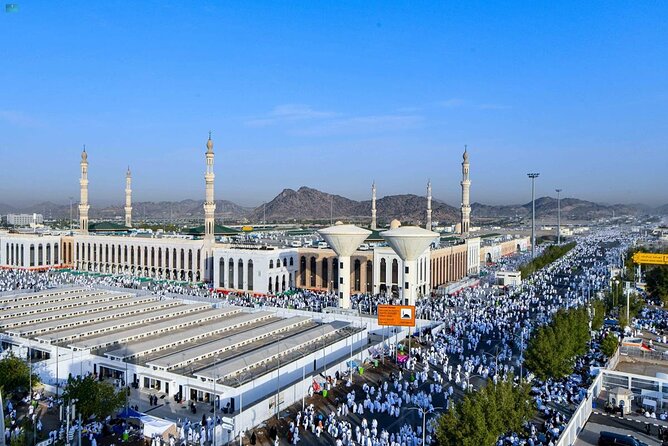
Faith takes physical shape around Makkah. This private tour links Arafat, Muzdalifah, Mina, and Jabal Al Noor in one focused outing, giving you religious context as you move between the sites.
I like the private air-conditioned vehicle and the guide’s willingness to explain extra landmarks along the road. I also like the sensible route, which follows the order of the Hajj sites before finishing at the Hira Cultural District. The main concern is service consistency: one booking had a vehicle problem and a long delay reaching the company.
This is not a sightseeing trip built around grand views or long museum visits. It is a compact, meaningful introduction to the places connected with Hajj and the life of Prophet Muhammad, peace and blessings be upon him. For a group of up to four, the $100 price can be good value, especially if you want a private ride rather than a large coach.
In This Review
- Key points about this Makkah holy-sites tour
- Why the route through Arafat matters
- Jabal Al Rahma in about 30 minutes
- A brief stop at Namira Mosque
- From sunset at Muzdalifah to Mina
- Al-Mash’ar Al-Haram Mosque
- Mina and the Jamarat Bridge
- Al-Khaif Mosque in five minutes
- Jabal Al Noor and the story of Hira Cave
- One hour at the Hira Cultural District
- What the private vehicle adds
- Is $100 good value for four people?
- Timing, walking, and who should book
- Should you book this Makkah holy-sites tour?
- FAQ
- How long does the tour take?
- How many people can join the private tour?
- Is transportation included?
- Is admission to the Hira Cultural District included?
- Does the tour include food?
- What is the cancellation policy?
Key points about this Makkah holy-sites tour
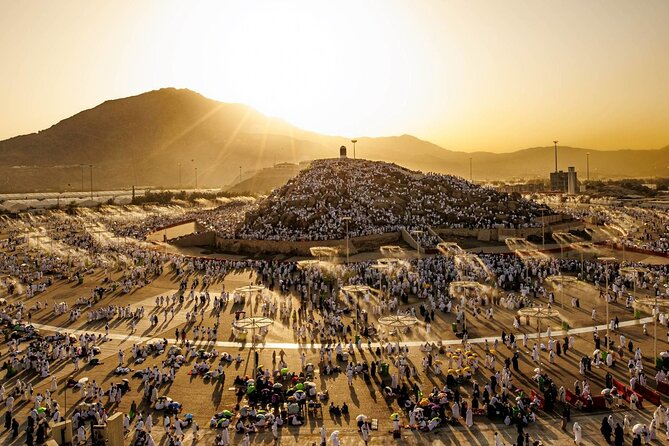
- Arafat begins the story: Spend time at Jabal Al Rahma and learn why standing at Arafat is central to Hajj.
- The route follows the Hajj sites: Continue through Muzdalifah and Mina, including Al-Mash’ar Al-Haram Mosque, the Jamarat Bridge, and Al-Khaif Mosque.
- Jabal Al Noor adds a personal connection: Hear about the mountain and the nearby Hira Cave, linked with the first revelation.
- The Hira Cultural District requires extra payment: Allow about one hour for its exhibitions, museums, and cultural library.
- Private transport keeps the outing simple: Your group of up to four shares an air-conditioned vehicle with WiFi and bottled water.
- Plan for a short, active visit: The full experience takes about three to four hours, with walking at several stops.
Why the route through Arafat matters
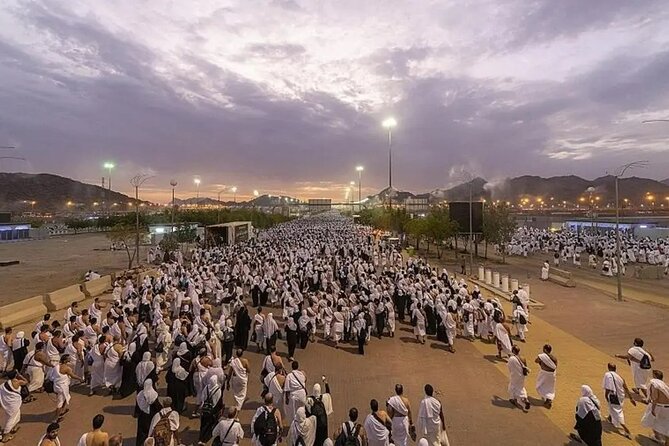
Arafat is not just another stop on a religious tour. It is the place where pilgrims gather each year during Hajj, and standing at Arafat is regarded as the most important pillar of the pilgrimage. Without it, Hajj is incomplete.
That gives the first part of the tour real weight. You are not simply checking off a mountain and a mosque. You are learning how one place fits into the central movement of Hajj, and why millions of Muslims associate Arafat with prayer, mercy, and spiritual renewal.
The tour begins with an overview of Arafat before moving to its specific sites. This is useful because the area can otherwise feel spread out and difficult to understand. The guide’s explanations help turn roads, open ground, and religious buildings into part of a clear story.
More ziyarat visits in Makkah and Madinah:
- Al Madinah: City Sightseeing Hop-On Hop-Off Bus Tour
★ 3.9 · 148 reviews - Madinah Culture & History Tour – Led by Local Guide
★ 5.0 · 74 reviews - Umrah Guide
★ 4.5 · 59 reviews
Jabal Al Rahma in about 30 minutes
Jabal Al Rahma, also called Mount Rahma or the Mount of Mercy, receives the longest stop in Arafat. You have about 30 minutes here, and there is no separate admission charge.
The site is connected with the day of Arafah, when pilgrims gather and pray. Your guide explains the mountain’s place in pilgrimage and the stories associated with it. That narration is important because the physical site itself is fairly simple. The meaning comes from the religious context.
You should expect some walking here, along with exposure to the open surroundings. Wear comfortable shoes and keep water close. The tour provides bottled water, but Makkah’s heat can make even a short stop feel longer than it looks on paper.
This is one of the better parts of the experience for anyone visiting Makkah for the first time. You get time to pause, listen, and understand the site instead of seeing it only through a vehicle window.
A brief stop at Namira Mosque
Namira Mosque receives about five minutes. That may sound short, but the purpose is mainly orientation and explanation rather than a long visit inside the mosque.
Namira is associated with the Dhuhr and Asr prayers on the Day of Arafah. The tour also covers the Prophet Muhammad’s sermon there and the role the mosque plays during Hajj.
Because the stop is brief, you should not expect a full mosque visit or extended prayer time. Think of it as a focused introduction. The guide fills in the details while the wider Arafat story is still fresh.
From sunset at Muzdalifah to Mina
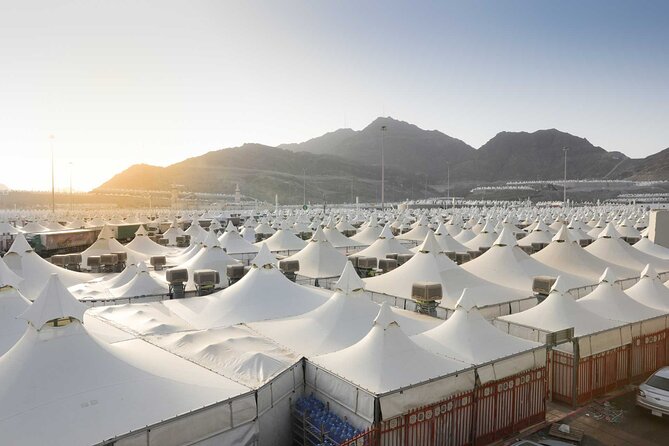
After Arafat, the route moves toward Muzdalifah. During Hajj, pilgrims travel there from Arafat at sunset on the ninth day. That movement is one of the key stages of the pilgrimage, so seeing the connection between the two places helps you understand the physical rhythm of Hajj.
The tour does not turn Muzdalifah into a long walking section. Instead, you learn about its role and continue to Al-Mash’ar Al-Haram Mosque.
A completely different kind of day:
- Riyadh: Edge Of The World, camels &Stargazing with 4×4
★ 4.7 · 1,050 reviews - Edge of The World Riyadh with Camel Ride ,Bat Cave Visit & Dinner
★ 5.0 · 778 reviews - Edge Of The World Hike(Dinner under stars,village,bats cave,camp)
★ 4.5 · 675 reviews - Edge of the World with 4×4 vehicles, sunset Dinner and stargazing
★ 4.5 · 567 reviews
Al-Mash’ar Al-Haram Mosque
The mosque is linked with the combined and shortened Maghrib and Isha prayers performed by pilgrims and worshippers. The stop takes about five minutes and has no separate admission fee.
Again, this is a short explanatory pause rather than a major architectural visit. The value is in knowing what happens here during Hajj and how Muzdalifah follows Arafat in the pilgrimage sequence.
The quick timing also helps the tour cover a wide area within three to four hours. If you want long periods for prayer or quiet reflection at every site, this schedule may feel rushed. If you want a clear overview, the pace is practical.
Mina and the Jamarat Bridge
The next major section is Mina, which pilgrims visit twice during Hajj. This is where the tour introduces the Jamarat Bridge complex and the three Jamarat that pilgrims stone during the days of Hajj.
The Jamarat Bridge is a large modern complex, but its importance is tied to the ritual it supports. Your guide explains the three Jamarat and their place in the pilgrimage. That background matters because the scale of the structure can distract from the religious meaning.
I like the way this stop connects the modern facilities with an ancient act of worship. You see how Makkah accommodates huge numbers of pilgrims while preserving the ritual sequence.
The supplied timing does not give a separate duration for the Jamarat Bridge, so your exact time there may depend on traffic, access, and the pace of the day. The overall tour remains limited to roughly half a day.
Al-Khaif Mosque in five minutes
Al-Khaif Mosque receives another short stop, about five minutes. The tour explains its association with prophets and with Prophet Muhammad, peace and blessings be upon him, who prayed there.
As with Namira and Al-Mash’ar Al-Haram, this is a compact visit. You are getting religious background and a sense of place rather than a long architectural tour.
The three mosque stops work best as part of the larger route. Taken alone, five minutes would not offer much. Taken alongside the guide’s explanation of Arafat, Muzdalifah, and Mina, they help connect the stages of Hajj.
Jabal Al Noor and the story of Hira Cave
Jabal Al Noor gives the tour a different focus. The earlier stops center on the Hajj route. This mountain is connected with the life of Prophet Muhammad, peace and blessings be upon him, and the story of Hira Cave.
You have about 20 minutes here, with no separate admission charge. The tour explains the mountain, its place among Makkah’s sacred sites, and the stories connected with the Prophet.
The time allocation suggests a viewpoint and explanation stop, not a full climb to Hira Cave. Do not book this expecting a mountain hike or a long visit inside the cave. The available details describe learning about the site, while the separate cultural district offers more material about Hira and the first revelation.
This distinction is useful. Jabal Al Noor gives you the physical setting and the guide’s account. The Hira Cultural District provides the indoor exhibits and additional interpretation.
One hour at the Hira Cultural District
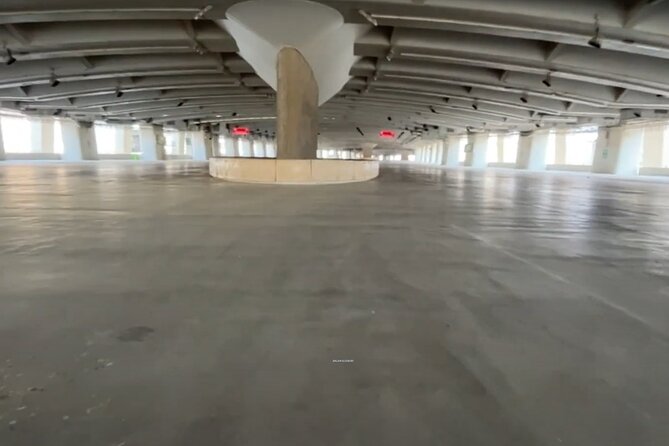
The final stop is the Hira Cultural District, also described as the Hira Cultural Exhibit. This is the most museum-focused part of the outing and lasts about one hour.
The district includes museums and exhibitions covering the story of Hira Cave and the life of Prophet Muhammad, peace and blessings be upon him. It also has a cultural library with information about the history of Makkah and Medina.
Modern presentation tools are used to support the displays. That makes this a useful finish after the outdoor sites, especially if you want more than a brief spoken explanation from the driver or guide.
Admission is not included, so budget for an extra ticket. The tour information does not state the admission price, so you should check the current cost before booking if your total budget is tight.
The one-hour visit also affects how you read the three to four-hour duration. The outdoor stops are generally short, while Hira provides the longest single block of time. Traffic and access can change the balance, so leave room for a flexible schedule.
What the private vehicle adds

The tour is private for your group, with a maximum of four people. You get private transportation in an air-conditioned vehicle, plus WiFi on board and bottled water.
That setup is a strong point in Makkah. You are moving among several separated sites, and a private vehicle means you do not have to wait for a larger group at every stop. You can also ask for extra explanations as you pass other landmarks.
One family booking praised the clean, comfortable car and the guide’s patience and flexibility. The guide also shared information about additional places along the road and offered to take photographs. Those small touches can make a half-day outing feel more personal.
Another account describes a punctual driver who gave extra explanations and used an audio guide. That suggests the quality of the narration can be a major part of the experience. Still, the exact guide and vehicle may vary, so I would confirm the pickup details before the day of travel.
There is one clear service warning. A booking did not receive the reserved vehicle, and it reportedly took about an hour to reach the company and explain the problem. That appears to be an exception rather than the normal pattern, but it is worth taking seriously. Save the provider’s contact details and confirm the vehicle and pickup time in advance.
Is $100 good value for four people?
The listed price is $100 per group of up to four, not $100 per person. If four people share the booking, that works out to $25 each before any Hira Cultural District admission.
For a private, air-conditioned ride covering Arafat, Muzdalifah, Mina, Jabal Al Noor, and the cultural district, that can be good value. You are paying for transport, a guide or driver’s explanations, bottled water, and the convenience of keeping your own group together.
For one or two people, the per-person cost is higher. You should compare that with the value of private transport and the difficulty of arranging several sacred sites independently.
Brunch is not included. The tour lasts only three to four hours, so you may prefer to eat before or after the outing rather than expect a meal along the way.
Timing, walking, and who should book

The experience combines driving with walking at the holy sites. The information says most people can participate, but you should still be ready to walk at Jabal Al Rahma, Jabal Al Noor, and the Hira Cultural District.
The route is a good fit if you want historical and religious explanation without committing to a full-day program. Families may appreciate the private format, particularly because the guide can be patient and flexible with the group.
It also suits first-time visitors who want to understand how the Hajj sites relate to one another. You will see the sequence from Arafat to Muzdalifah to Mina, then shift toward the story of revelation at Jabal Al Noor and Hira.
It may be less suitable if you want long prayer periods, detailed architecture, or a serious climb to Hira Cave. The schedule gives only five minutes at several mosques and about 20 minutes at Jabal Al Noor.
Pickup is offered, and the experience is available with a mobile ticket. It is also near public transportation, though the private vehicle is the main advantage. The tour requires good weather, and a weather cancellation can result in a new date or a full refund.
You can cancel for a full refund up to 24 hours before the start time. Within 24 hours, refunds are not provided, and changes are not accepted.
Should you book this Makkah holy-sites tour?

I would book it if you want a private, efficient introduction to Makkah’s Hajj sites and the story of Hira. The best features are the sensible route, comfortable transport, personal explanations, and the chance to see places that are difficult to understand without local context.
I would first confirm the pickup and vehicle details, especially after the reported transport mix-up. I would also check the current Hira Cultural District admission price and decide if you want the museum portion included in your budget.
For four people, the $100 group rate is attractive. For a small group seeking a calm overview rather than a long hike or an extended mosque visit, this tour offers a practical way to connect the geography of Makkah with the central events of Hajj and revelation.
FAQ
How long does the tour take?
The experience lasts approximately three to four hours.
How many people can join the private tour?
The price covers one private group of up to four people.
Is transportation included?
Yes. Private transportation in an air-conditioned vehicle is included, along with WiFi on board and bottled water.
Is admission to the Hira Cultural District included?
No. Admission to the Hira Cultural District is not included in the tour price.
Does the tour include food?
No. Brunch is not included.
What is the cancellation policy?
You can cancel at least 24 hours before the start time for a full refund. Cancellations or changes made within 24 hours are not refunded or accepted. If poor weather causes the tour to be canceled, you are offered another date or a full refund.
Just added in Saudi Arabia
- Wadi Lajab Canyon Hiking Tour★ 5.0 · 2 reviews
- Wadi Disah Adventure (from Tabuk)★ 5.0 · 1 review
- Uncover the Rich Heritage of Diriyah, the city of Earth.★ 5.0 · 1 review
- Discover Taif City★ 5.0 · 4 reviews
- Full day Jabal Al Lawz with Biblical Sites visit★ 5.0 · 2 reviews
- Historical Landmark in Tabuk Region Full Day Tour★ 5.0 · 2 reviews
- The Amazing Asfar Lake at Al Ahsa Desert★ 5.0 · 1 review
- Visit Taif The City of Roses★ 5.0 · 2 reviews
Makkah and Madinah Ziyarat, compared.
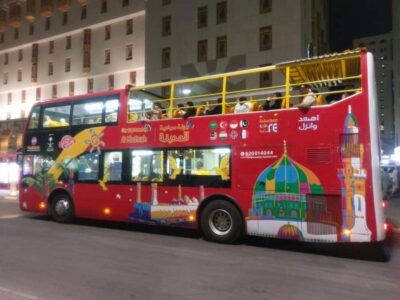
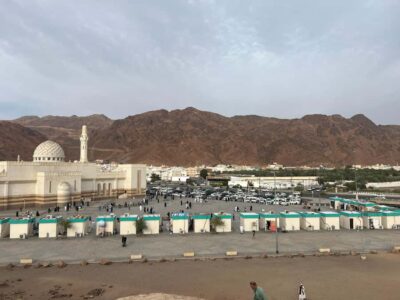
Madinah Culture & History Tour – Led by Local Guide
Read our review →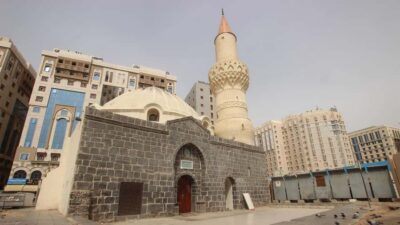
City Sightseeing Al Madinah Hop-On Hop-Off Bus Tour
Read our review →
Jabal Al-Nour, Cave Hira, and Mount Arafat Tour
Read our review →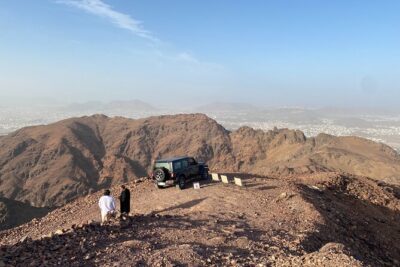
Browse the lists this tour appears in