
REVIEW · DIRIYAH AND OLD RIYADH
Riyadh: Masmak Fort, Souq AlZal, and Murabba Palace Tour
Riyadh’s past is closer than it looks. This six-hour guided outing links the city’s key historic sites, from the mudbrick Masmak Fort and old Souq AlZal to Murabba Palace, the National Museum, Diriyah, and a traditional Najdi meal. I especially like the way it combines major sights with the everyday feel of an old market, and I like that hotel pickup, admissions, and transport are included. The main drawback is the pace: several important stops are packed into one day, so you may spend less time at each place than an especially curious history fan would want.
The guide can lead in English or Arabic, and recent guests singled out guides Sultan and Thamer for their kindness and strong explanations. At $149 per person, the tour is not a bargain-basement city walk, but it can be good value if you want one organized day covering Riyadh’s historic core, museums, a heritage park, and lunch without arranging each piece yourself. Plan for sun, walking, and a modest dress code.
In This Review
- Key points at a glance
- Why this six-hour route works for first-time visitors
- Masmak Fort and the story of Saudi unification
- Souq AlZal, where old objects still change hands
- Murabba Palace and its central architectural idea
- A useful stop at the King Abdulaziz Foundation
- The National Museum puts the pieces together
- Al Bujairi Heritage Park and views toward At Turaif
- Najdi Village brings food into the story
- Is $149 good value?
- Practical advice before you go
- Who will enjoy this Riyadh tour most?
- Should you book the Masmak Fort and Murabba Palace tour?
- FAQ
- How long does the Riyadh historic tour last?
- Where can I be picked up?
- Where can I be dropped off?
- What languages does the guide speak?
- Are entrance fees included?
- What should I bring?
Key points at a glance
- Masmak Fort sets the historical tone: This clay and mudbrick fortress is tied to the struggle that helped establish modern Saudi Arabia.
- Souq AlZal feels like a working time capsule: Look for antiques, rare coins, old utensils, musical instruments, record players, and auction activity.
- Murabba Palace reveals royal domestic design: Its central foyer is surrounded by rooms in a traditional layout.
- The National Museum puts the day into context: Its collection includes about 3,700 artifacts, including statues, scripts, and sculptures.
- Diriyah adds a scenic final sightseeing stop: Al Bujairi Heritage Park overlooks At Turaif and Wadi Hanifah.
- Najdi Village finishes with local food: The meal gives the tour a taste of Saudi heritage rather than ending with another display case.
Why this six-hour route works for first-time visitors
Riyadh can feel spread out, and its historic places are not all clustered around one small walking district. This tour solves that problem by joining several sites in one route, with pickup and drop-off at either the Kingdom Centre or King Khalid International Airport.
That arrangement is useful if you have limited time in the city or want a guided introduction before exploring on your own. You do not have to work out how to connect Masmak Fort with Murabba Palace, the National Museum, and Diriyah. The trade-off is a full schedule. You are getting breadth rather than long, quiet visits.
The tour lasts six hours, with walking periods listed at about one hour and one and a half hours. That does not mean every stop takes exactly that long, but it does signal that this is an active outing. Wear comfortable shoes, carry water, and bring sunscreen and a hat. Riyadh’s sun can make a short walk feel much longer.
More Diriyah and old Riyadh trips:
- Al Masmak Fortress, Murabba Palace, and Souq Al Zal Tour
★ 5.0 · 19 reviews - From Riyadh: Diriyah UNESCO Heritage Tour
★ 3.7 · 11 reviews - Riyadh : Diriyah Historic
★ 4.9 · 9 reviews
Masmak Fort and the story of Saudi unification
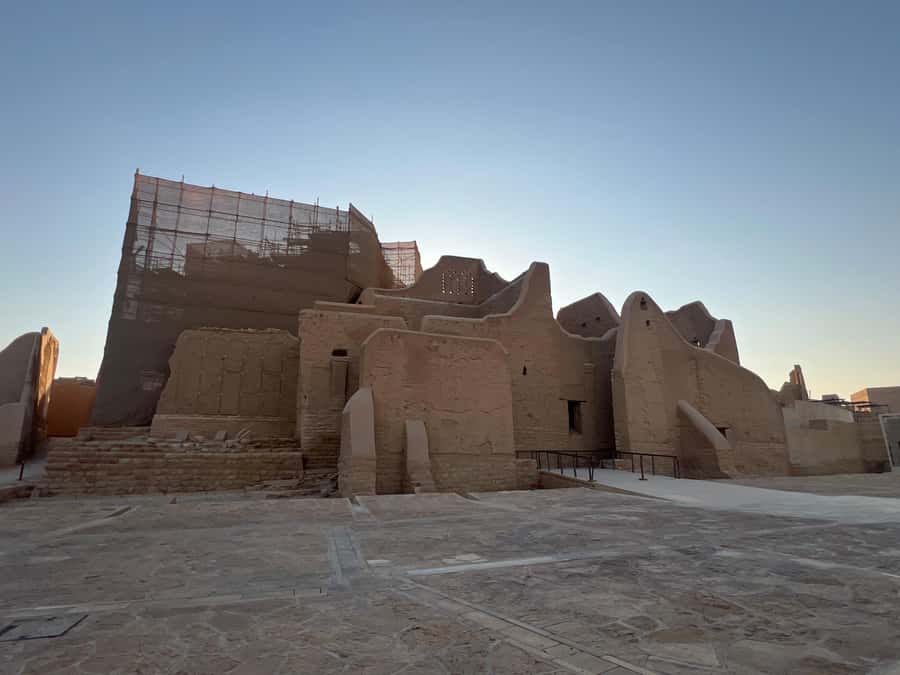
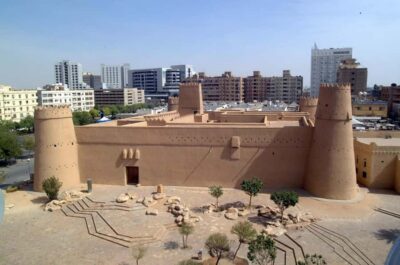
Masmak Fort is the natural opening chapter. Built from clay and mudbrick, it has a plain, sturdy appearance that tells you something about the materials and building traditions of old Riyadh. This is not a polished palace. Its appeal comes from its connection to a turning point in the country’s formation.
The fort was the scene of a historic battle that shifted control in favor of the House of Saud. That event helped pave the way for the modern Kingdom of Saudi Arabia, making Masmak more than an old defensive building. It is a symbol of political change, and a guide can help you connect the physical site with the larger national story.
I like beginning here because the fort gives the rest of the day a clear frame. After seeing the place linked to the struggle for control of Riyadh, the later palaces, archives, and museum exhibits make more sense. You are not just collecting old buildings. You are following the growth of a city and a state.
Give yourself time to notice the construction. Clay and mudbrick create a very different impression from the stone forts familiar to many visitors. The fort is also a reminder that Saudi history is not only found in grand royal settings. It is present in practical buildings made for defense, work, and survival.
Souq AlZal, where old objects still change hands
Souq AlZal is one of the most distinctive parts of the route. The market carries roughly a century of history in its narrow lanes, and its atmosphere is different from a museum. Instead of objects arranged behind glass, you may see them offered, discussed, and sold.
The market is known for antiques, rare coins, old utensils, musical instruments, and old record players. You might also find other objects connected with folk traditions. The selection can change, which is part of the pleasure. This is a place for patient looking, not a quick march from one landmark to the next.
Listen for the sellers’ voices and auction activity. That sound gives the market much of its character. Even if you do not buy anything, the exchange itself is worth watching. It gives you a glimpse of how old items remain part of daily commerce rather than being treated only as historical artifacts.
I would keep your expectations sensible. Souq AlZal is not presented as a carefully staged museum exhibit, and you cannot count on finding a particular coin, instrument, or piece of furniture. That uncertainty is exactly what makes the stop feel more genuine. If you enjoy browsing, asking questions, and spotting odd little objects, this may be your favorite part of the day.
Personal expenses are not included, so purchases at the market are your responsibility. If you plan to shop, leave room in your budget and ask about an item before assuming it is decorative, antique, or priced for bargaining.
Murabba Palace and its central architectural idea
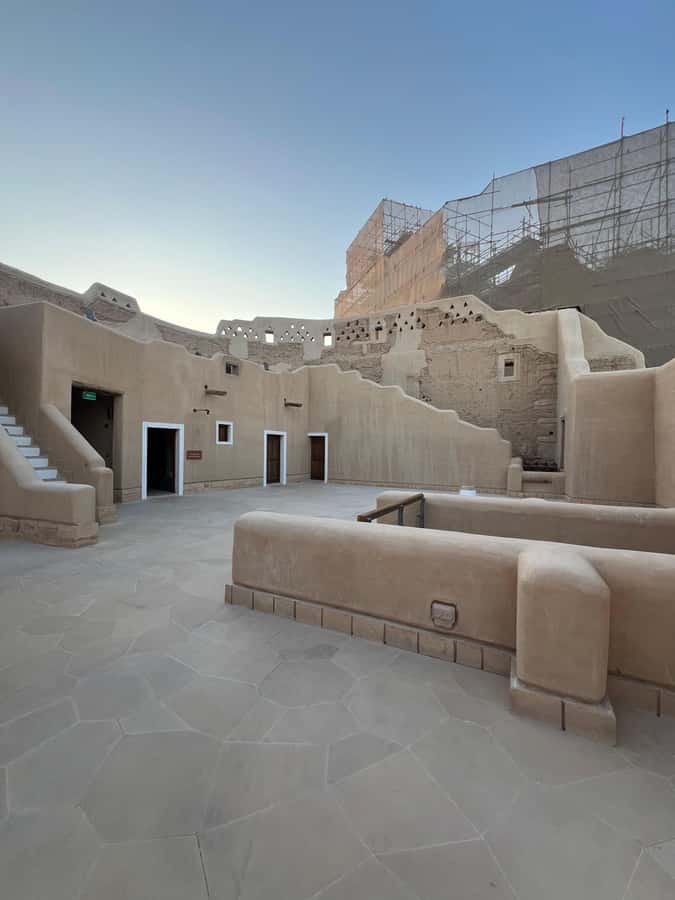
Murabba Palace was established on the order of King Abdulaziz, founder of the Kingdom. Its design offers a different view of the period from Masmak Fort. Here, the focus shifts from defense to royal residence and administration.
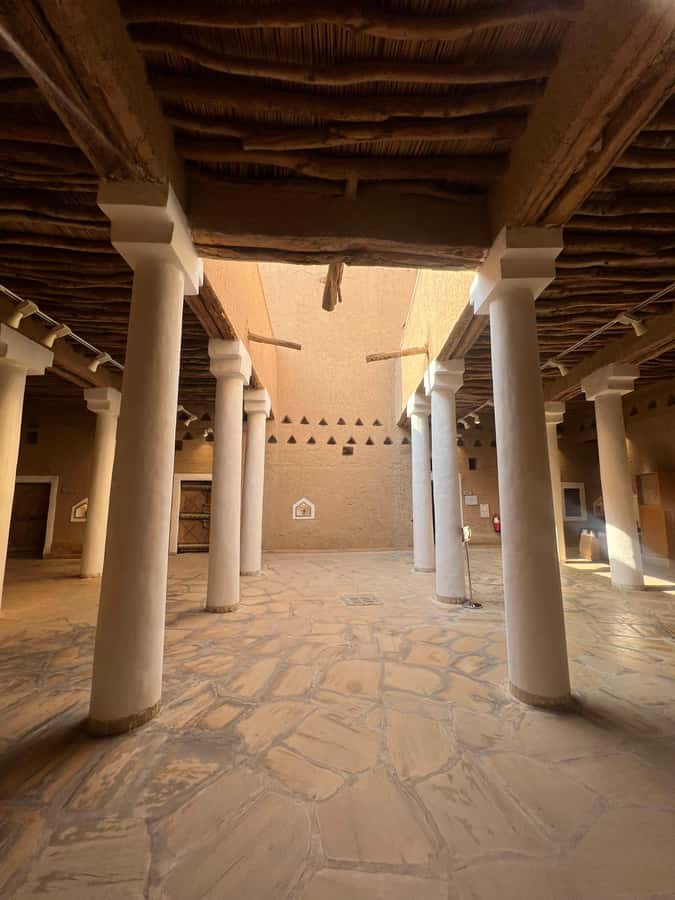
The feature to watch is the foyer at the center of the palace. Rooms surround this central space, following traditional design ideas common at the time. That arrangement gives the palace its character. Rather than treating the building as a collection of unrelated rooms, look at how the central area organizes the whole structure.
The palace is valuable for visitors who want to see how local architectural traditions continued within a royal setting. Its design is not simply ornamental. The layout shows how space, movement, and function were handled in an earlier period of Riyadh’s development.
The visit is listed as a walking stop of about an hour. That is enough for a guided introduction, but perhaps not enough for every architectural detail. If you are interested in building design, pay close attention to the guide and use your walking time to compare the palace with the simpler form of Masmak Fort.
More things to do in Riyadh:
- Riyadh: Edge Of The World, camels &Stargazing with 4×4
★ 4.7 · 1,050 reviews - Edge of The World Riyadh with Camel Ride ,Bat Cave Visit & Dinner
★ 5.0 · 778 reviews - Edge Of The World Hike(Dinner under stars,village,bats cave,camp)
★ 4.5 · 675 reviews - Edge of the World with 4×4 vehicles, sunset Dinner and stargazing
★ 4.5 · 567 reviews
A useful stop at the King Abdulaziz Foundation
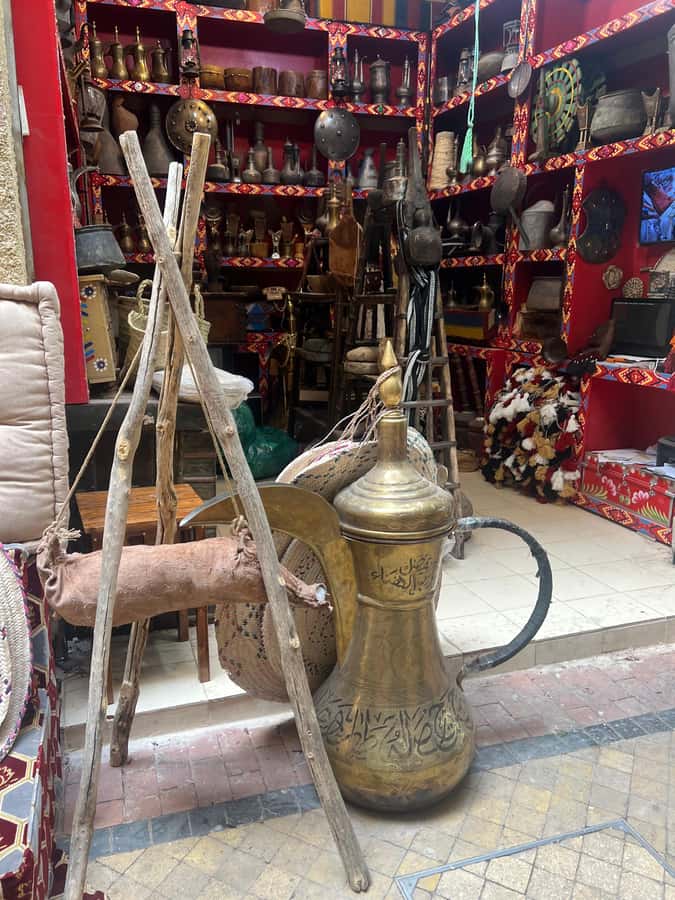
On the way to the palace, the tour includes the King Abdulaziz Foundation for Research and Archives, also known as Darah. Its work covers the history, geography, literature, and heritage of Saudi Arabia.
This stop adds depth to the palace visit. A palace can show you rooms and design, but an archive helps explain the records and ideas behind a country’s story. The provided details do not specify a separate visit length or a particular display, so you should treat Darah as a supporting stop rather than plan your day around a specific exhibit.
Still, its presence matters. It signals that the tour is not limited to famous buildings. It also points toward the documents, writing, maps, and cultural material that help preserve national memory.
The National Museum puts the pieces together
The National Museum is the broadest history stop on the route. Located in the Al-Murabba neighborhood near King Abdulaziz Palace, it presents artistic and historical evidence from Saudi Arabia through about 3,700 artifacts. These include statues, scripts, and distinctive sculptures.
A museum of this size can easily become tiring after a fort, market, and palace. I suggest treating it as the place where you connect the dots, not as a challenge to see every object. Masmak introduces political change. Murabba shows royal architecture. The National Museum widens the frame to include art, writing, objects, and earlier periods.
The stated museum area is 17,000 square meters, a figure that gives you an idea of its scale. You are unlikely to absorb every section during a tightly scheduled city tour. That is not a flaw in the museum, but it is a limitation of the format. If museums are your main reason for visiting Riyadh, you may want a separate visit with more time.
For a first visit, though, the museum earns its place. It helps prevent the day from becoming a string of isolated photo stops. You get a larger picture of the country’s cultural and historical development.
Al Bujairi Heritage Park and views toward At Turaif
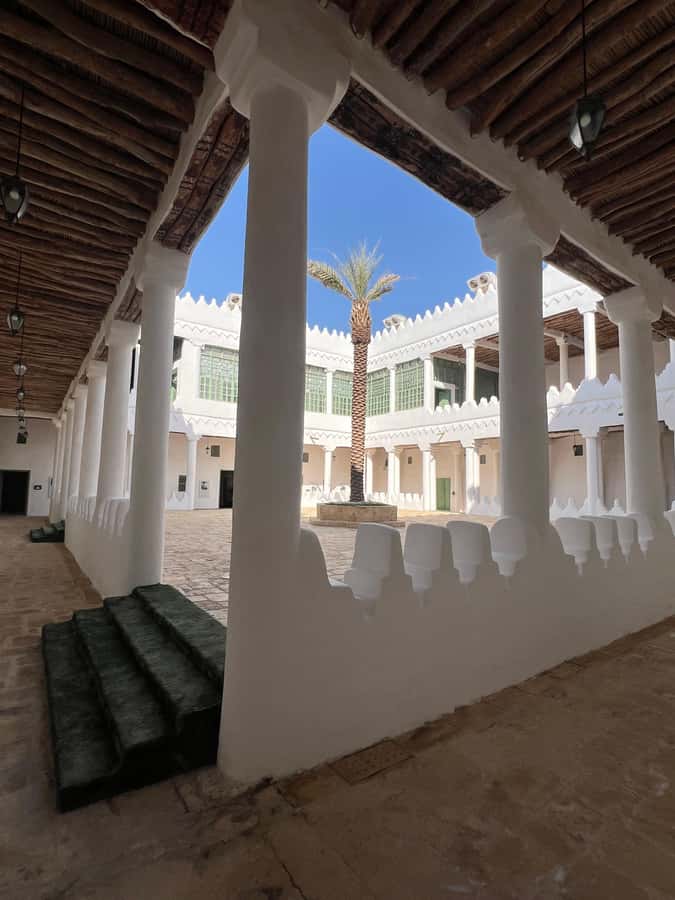
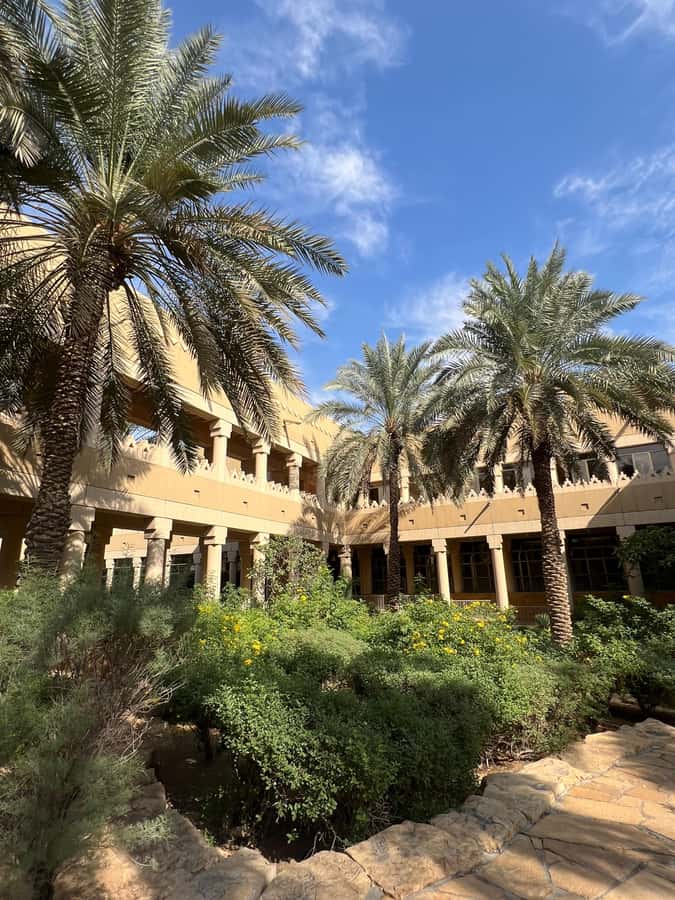
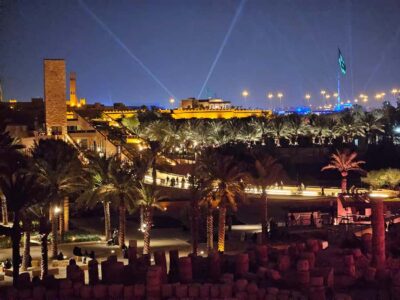
The route then reaches Al Bujairi Heritage Park in the historic Diriyah district. The park overlooks At Turaif, a UNESCO World Heritage Site, and Wadi Hanifah, a desert oasis in the heart of the district.
This stop provides a change of mood. After enclosed rooms, displays, and market lanes, you get open views and a sense of the setting around old Diriyah. The park is included as an exploration stop, but the supplied details do not promise admission to every attraction in the wider Diriyah area. Think of it as a heritage and viewpoint visit, not a full tour of At Turaif itself.
The view toward At Turaif is a strong reason to keep your camera ready. Photography is allowed, though you should respect local sensitivities. A hat, sunscreen, and water are especially useful here because the outdoor portion exposes you to the sun.
This part of the route can also be a practical test of your walking comfort. The tour is described as wheelchair accessible, yet it is also marked as unsuitable for people with mobility impairments. That is mixed information, so anyone with mobility concerns should confirm the exact route, surfaces, and assistance available before booking.
Najdi Village brings food into the story
The final stop is Najdi Village, a restaurant with a heritage character that serves popular Saudi food, especially dishes from the Najdi tradition. The meal is an important finish because food can explain a place in a way that a display cannot.
The information provided does not specify a set menu or confirm that the meal is included in the $149 price. Personal expenses are excluded, so you should clarify the meal arrangement before booking if this affects your budget. The experience description does present the restaurant as part of the tour, but the exact payment details are not stated.
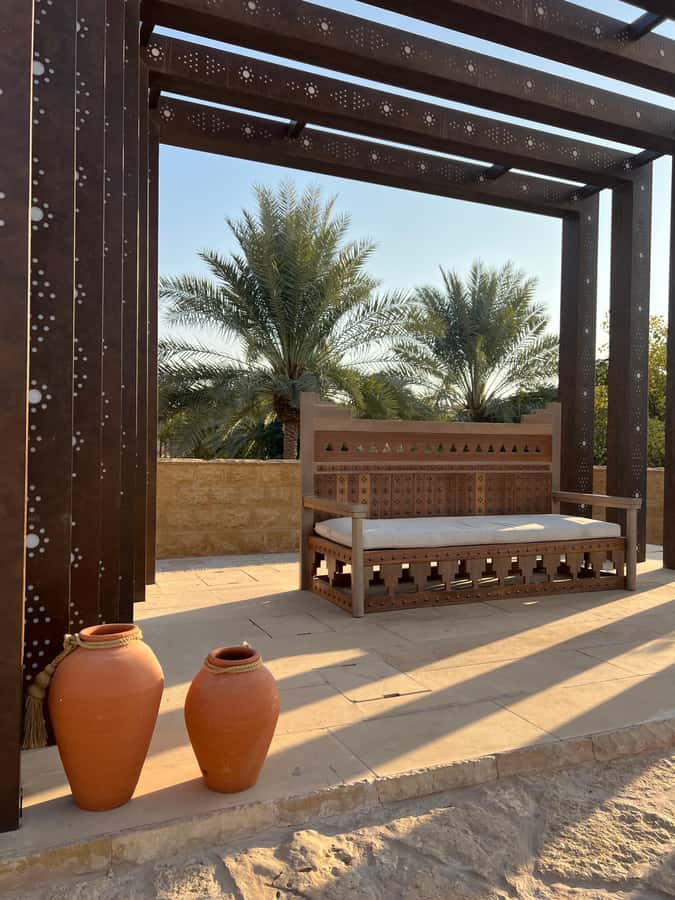
Even with that question, the restaurant fits the route well. After seeing forts, archives, palaces, and artifacts, you get a chance to connect with a living part of local heritage. If you are new to Najdi cuisine, ask the guide for help choosing. English and Arabic guiding is available, which should make that easier for many visitors.
Is $149 good value?
At $149 per person, this tour costs more than a simple fort visit or short market walk. The price makes more sense when you count the number of included pieces: hotel pickup and drop-off, entrance to Masmak Fort, the Souq AlZal visit, Murabba Palace, the National Museum, and Al Bujairi Heritage Park.
You are also paying for the guide’s interpretation and for a vehicle route across several parts of Riyadh. That matters in a city where separate taxis, entrance fees, and self-planned connections can eat up time. The value is strongest for a first-time visitor with one free day who wants an organized introduction.
The value is weaker if you prefer to spend half a day in one museum, shop slowly in one market, or study architecture at length. This is a sampler of Riyadh’s historic side. It gives you a strong first look, but it cannot give every stop the attention it deserves.
The tour has a rating of 4.8 from seven ratings, and the praise centers on the guides. Sultan was described as kind, while Thamer was singled out as a great guide. Another guest called the tour amazing and said the guide helped them learn a lot. Those comments point to the factor that can make or break a packed sightseeing day: clear, friendly explanations.
Practical advice before you go
Choose the pickup point that best fits your day. You can begin at Kingdom Centre or King Khalid International Airport, and drop-off is available at either of those locations. That airport option may be useful if you are arranging the tour around a flight, but you should allow plenty of margin beyond the six-hour activity time for any airport plans.
Dress modestly in keeping with local customs. Bring comfortable shoes, a hat, sunscreen, a camera, and water. Smoking is not allowed during the activity.
The tour offers free cancellation up to 24 hours before departure for a full refund, and you can reserve now while paying later. Starting times depend on availability, so check the schedule before making other plans.
The route includes substantial walking. Although the activity information says it is wheelchair accessible, it also says it is not suitable for people with mobility impairments. That contradiction deserves a direct question to the provider, Abha Trips, before you reserve.
Who will enjoy this Riyadh tour most?
I would recommend it to a first-time visitor who wants a guided overview of Riyadh’s history and does not want to arrange transport between distant sights. It also suits anyone interested in the link between national history, royal architecture, traditional markets, museums, and local food.
It is a good match for people who enjoy variety. In six hours, you move from mudbrick defenses to old-market objects, a royal palace, a major museum, an outdoor heritage park, and a Najdi restaurant.
I would be more cautious if you dislike scheduled days or need long breaks. The number of stops means you should expect a steady pace. Visitors with mobility concerns should confirm the practical details before paying, despite the wheelchair-accessible label.
Should you book the Masmak Fort and Murabba Palace tour?
Book it if you want a well-rounded first look at Riyadh and value a guide who can explain what you are seeing. The combination of Masmak Fort, Souq AlZal, Murabba Palace, the National Museum, Al Bujairi Heritage Park, and Najdi food gives you more than a standard landmark visit.
Skip it if your priority is slow exploration. Independent visitors may prefer to give a full morning to the National Museum, browse Souq AlZal without a schedule, or spend more time around Diriyah.
For most first-time visitors with only one day for historic Riyadh, I think the tour is a sensible choice. Just confirm the meal cost, ask about walking conditions if needed, and prepare for a busy six hours under the sun.
FAQ
How long does the Riyadh historic tour last?
The tour lasts six hours.
Where can I be picked up?
Pickup is available at the Kingdom Centre or King Khalid International Airport.
Where can I be dropped off?
Drop-off is available at King Khalid International Airport or the Kingdom Centre.
What languages does the guide speak?
The live guide is available in English and Arabic.
Are entrance fees included?
Entrance to Masmak Fort, Murabba Palace, and the National Museum is included. The tour also includes visits to Souq AlZal and Al Bujairi Heritage Park.
What should I bring?
Bring comfortable shoes, a hat, sunscreen, a camera, and water. Dress modestly, and remember that smoking is not allowed.
Just added in Riyadh
- Uncover the Rich Heritage of Diriyah, the city of Earth.★ 5.0 · 1 review
- Riyadh City tour (Private Tour)★ 5.0 · 2 reviews
- 4X4 Dune Bashing with Sand Boarding in Pyramids of Saudi Arabia★ 5.0 · 1 review
- Full-Day Ancient Mysteries of Central Arabia Tour with Lunch★ 5.0 · 1 review
- Private Transfer to Airport and Hotel in Riyadh★ 5.0 · 2 reviews
- Explore Edge of The World in a Private Trip with Saudi Dinner★ 5.0 · 3 reviews
- Full-Day Ushayger Tour with Lunch from Riyadh★ 4.5 · 4 reviews
- Full-Day Riyadh City Tour with optional lunch★ 5.0 · 2 reviews
Diriyah and Old Riyadh, compared.
Al Masmak Fortress, Murabba Palace, and Souq Al Zal Tour
Read our review →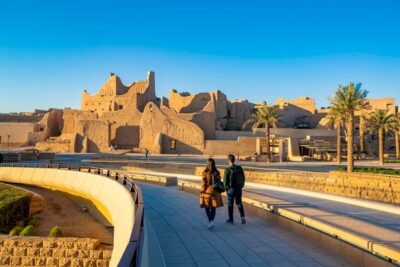
Diriyah, AL Masmak Fortress, AL Murabba Palace Tour
Read our review →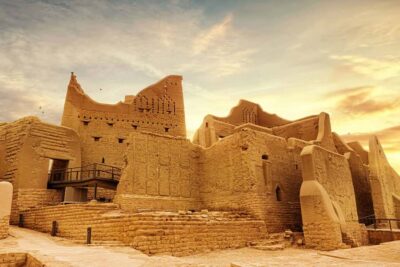
Half Day in Riyadh, Almasmak, National Museum, Kingdom Tower
Read our review →
Al-Diriyah, Al-Masmak, Souq Al-Zal, & Boulevard Tour
Read our review →
Browse the lists this tour appears in