
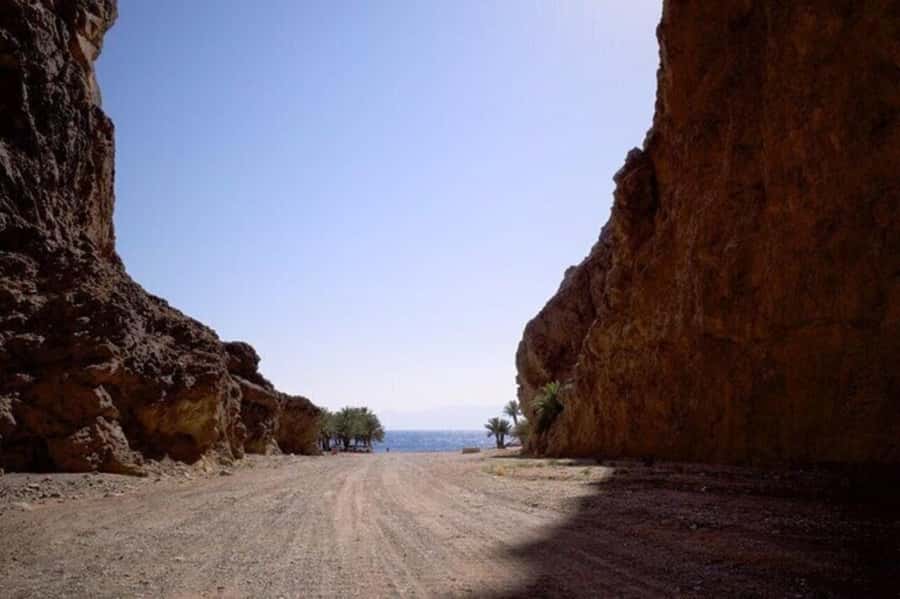
REVIEW · SAUDI ARABIA
Explore the ancient The Land Of Midian& Split Rock Of Mose’s
Ancient stories meet open desert. This seven-hour private tour from Tabuk takes you through the Land of Midian, with stops tied to Prophet Shuaib and Moses, including the Split Rock, Ship Mountain, Moses Well, and Maqna’s 12 springs. I like the mix of religious history and dramatic scenery, and I especially like that the private format gives you time to pause rather than rush from one viewpoint to the next.
The main consideration is the $575 per-person price. That is a serious sum for a seven-hour outing, though private transport, an English or Arabic guide, permits, refreshments, taxes, and hotel pickup are included. The tour also involves a moderate amount of walking, and the remote desert setting means you should dress for heat, sun, and changing weather.
In This Review
- Key points before you book
- Why Midian makes such a powerful day trip
- Leaving Tabuk in a private vehicle
- Meeting the Split Rock of Moses
- Jabal Safina, the mountain shaped like a ship
- Prophet Shuaib’s tomb and the caves
- Moses Well and the stories carried by water
- Maqna and the 12 springs of Moses
- What $575 includes, and what it does not
- Who will enjoy this experience most
- Useful planning advice for the seven-hour outing
- Should you book the Land of Midian tour?
- FAQ
- Where does the tour take place?
- How long does the tour last?
- Is hotel pickup available?
- What languages does the guide speak?
- What is included in the price?
- Is a passport required?
- How much walking is involved?
- Can I cancel the booking?
Key points before you book
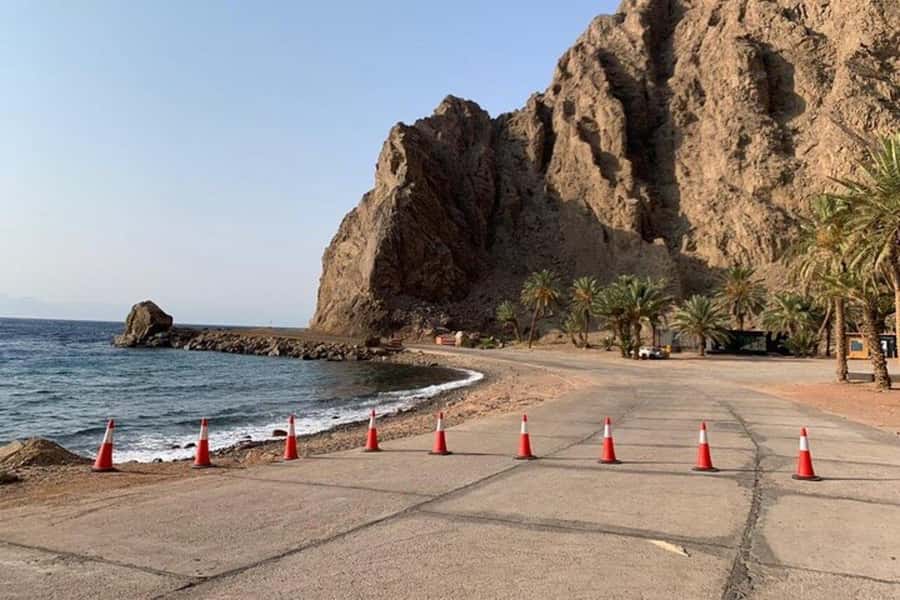
- Moses’ Split Rock is the main attraction: Hear the story connected with the rock and see the unusual formation for yourself.
- Jabal Safina means Ship Mountain: This memorable site adds a striking natural feature to the day.
- Prophet Shuaib’s sites give the tour its religious focus: Visit the tomb and caves associated with him.
- Moses Well adds another layer of the story: Your guide explains the tradition connected with this location.
- Maqna’s 12 springs provide a change of scenery: The springs and nearby Gulf of Aqaba setting bring water into an otherwise dry journey.
- Private service is a major part of the value: Pickup is available from your Tabuk hotel, with a private air-conditioned vehicle and a guide.
Why Midian makes such a powerful day trip
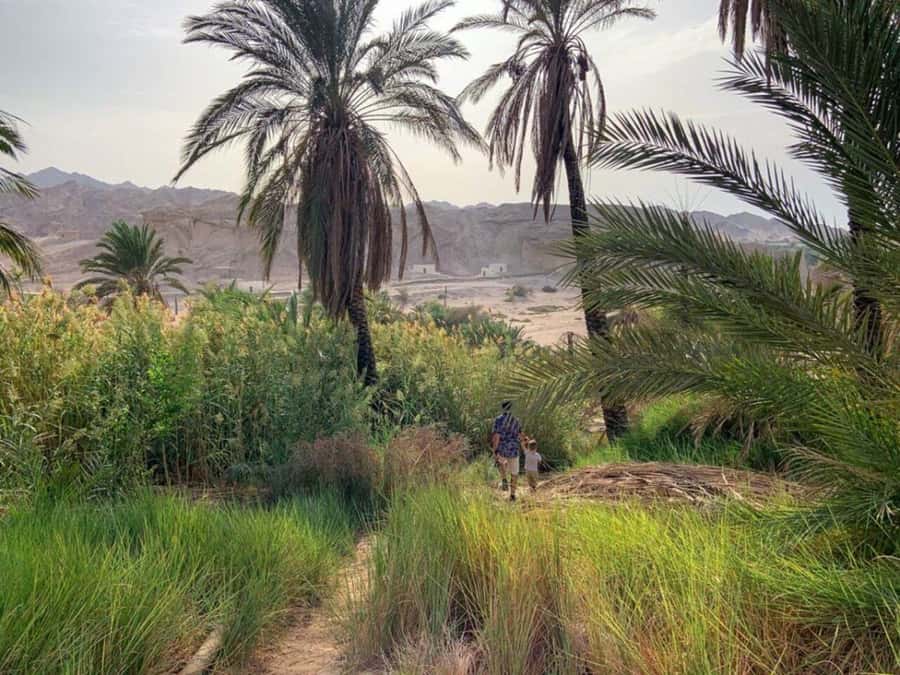
The Tabuk Region is not a place you visit only for polished attractions. Much of its appeal comes from the feeling of open space, bare rock, red sand, and old routes through the desert. The tour presents this area as the Land of Midian, connected with Prophet Shuaib, Moses, and the years Moses is traditionally said to have spent in exile.
You will hear stories from Islamic and biblical tradition as you move between the sites. That matters because the locations are not simply scenic stops. The guide’s explanations give the rocks, caves, springs, and wells a human meaning. Without that context, some formations could seem like distant points in a large desert. With it, the day becomes a lesson in how geography and faith are closely linked.
I would approach the religious stories with respect and curiosity. Some details belong to tradition and interpretation rather than modern historical proof. A good guide can explain the significance without asking you to treat every story as a verified archaeological fact.
The setting is also unusual in one practical sense. During one day, you may see scenery that shifts from dry red sand and rough stone toward the brilliant blue waters of the Gulf of Aqaba. The contrast helps explain why this part of northwestern Saudi Arabia has become such a compelling area for guided visits.
Other trips worth a look in Saudi Arabia:
- Riyadh: Edge Of The World, camels &Stargazing with 4×4
★ 4.7 · 1,050 reviews - Edge of The World Riyadh with Camel Ride ,Bat Cave Visit & Dinner
★ 5.0 · 778 reviews - Edge Of The World Hike(Dinner under stars,village,bats cave,camp)
★ 4.5 · 675 reviews
Leaving Tabuk in a private vehicle
Your guide can collect you from your hotel in Tabuk. The private air-conditioned vehicle is one of the most useful inclusions, since the tour lasts seven hours and the sites are spread across a broad area.
A private ride gives you more control than a large group outing. You can ask questions as they arise, and you are not tied to the pace of strangers. This is particularly helpful at religious and archaeological sites, where you may want a few quiet minutes rather than a quick photograph and an immediate departure.
The guide service is available in Arabic and English. Salman, the guide named in the available feedback, was praised for being kind, accommodating, and genuine. He took time at each site, explained the details, and allowed his guest to absorb the surroundings and take plenty of photographs. That kind of patience is worth noting because this tour depends heavily on interpretation, not just transport.
Water, snacks, coffee, and tea are included. These are modest extras, but they are practical in a hot, dry region. You should still check the weather before leaving and dress accordingly. Modest, comfortable clothing is expected because several stops have religious importance.
Meeting the Split Rock of Moses
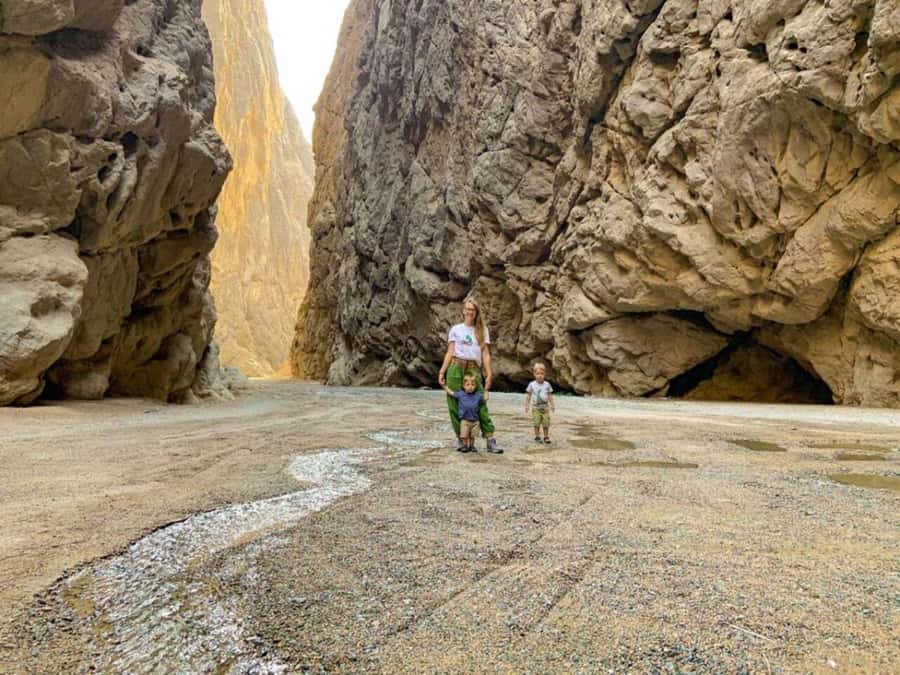
The Split Rock is the emotional center of the outing. The tour explains the story of Moses and the rock that split, allowing you to connect the local formation with a familiar religious narrative.
The attraction is not presented as a museum exhibit with signs and barriers. You are going to see a natural rock formation in its own setting, then listen as the guide explains why it matters. That makes the guide especially important. Ask questions, listen for the different names used for the site, and give yourself time to look closely at the shape and surrounding stone.
I would not expect a formal visitor center or a polished attraction. The appeal is the combination of place and story. You may find the site most meaningful if you already know something about Moses, but you do not need a detailed background to appreciate the guide’s explanation.
Photography should be a major part of the stop, but try not to make it the entire experience. The rock is the kind of place where a few quiet minutes can be as valuable as a full phone gallery.
Jabal Safina, the mountain shaped like a ship
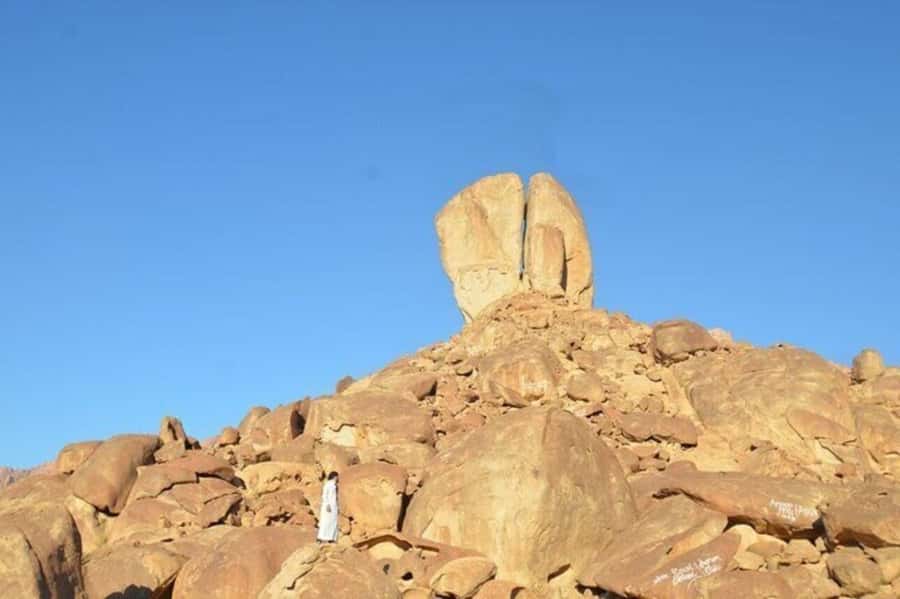
Jabal Safina, or Ship Mountain, is another memorable stop. The name points to the mountain’s ship-like appearance, giving the day a welcome moment of visual curiosity.
This is the sort of place where your guide’s position and explanation matter. Natural formations can look very different depending on where you stand, the light, and the angle of the rock. Let the guide point out the shape before you decide what you see. Then take your own photographs from several viewpoints if conditions allow.
The stop also breaks up the religious storytelling with a simple question of shape and scenery. That variety helps the seven-hour schedule feel less repetitive. You are not only moving from one sacred site to another. You are also reading the desert itself.
As with the other outdoor locations, expect walking over uneven ground rather than a paved attraction. Comfortable shoes are a sensible choice. The tour information calls for a moderate amount of walking, so this is not a good match if you need a fully vehicle-based excursion.
A completely different kind of day:
- Edge of the World with 4×4 vehicles, sunset Dinner and stargazing
★ 4.5 · 567 reviews - Riyadh: Edge Of The World and Bats Cave Tour by 4×4
★ 4.7 · 394 reviews - Edge of The World Riyadh,Camel Ride ,Bat Cave Visit & Dinner
★ 4.6 · 269 reviews - Riyadh Sunset Edge of the World & Deer Reserve 4WD Adventure
★ 4.8 · 186 reviews
Prophet Shuaib’s tomb and the caves
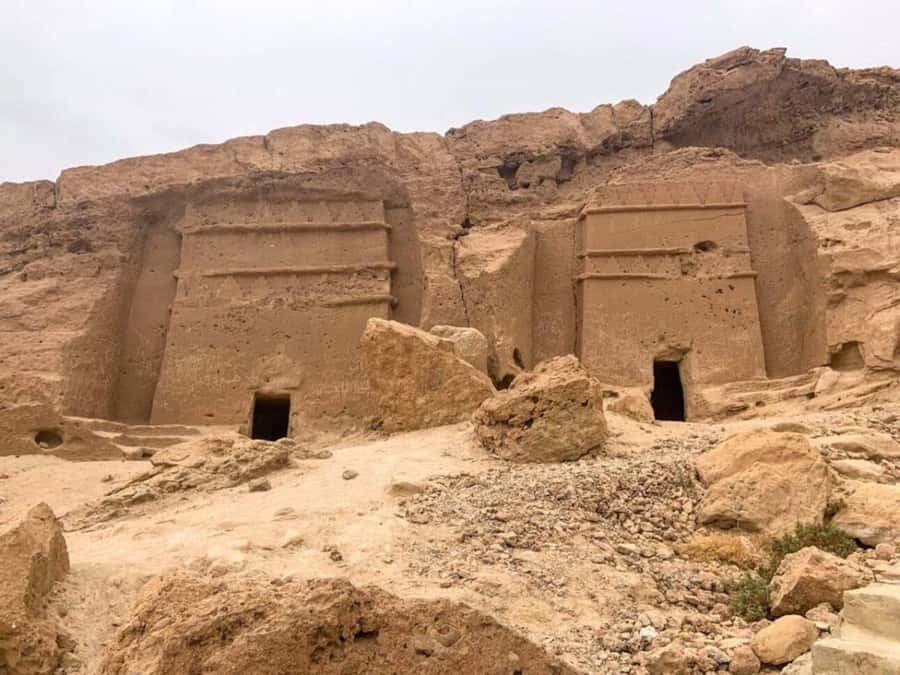
The visit to Prophet Shuaib’s tomb and the caves adds a more reflective part to the day. These sites connect the area with Shuaib, known in Islamic tradition as a prophet associated with the people of Midian.
A tomb visit requires a respectful attitude. Modest dress is important, and you should follow your guide’s instructions about where to walk, where to pause, and how to take photographs. The tour is not simply a sightseeing loop. It includes places of religious meaning, so your behavior matters as much as your camera settings.
The caves provide a physical sense of the area’s past. You can see how people connect the rough stone shelters with the stories of earlier communities and prophets. The information supplied does not give the exact cave conditions, so you should be ready for a simple, natural setting rather than a fully developed cave attraction.
I like this part of the itinerary because it slows the day down. The Split Rock and Jabal Safina are visually striking, but the tomb and caves ask you to pay closer attention to the human and spiritual side of Midian.
Moses Well and the stories carried by water
Moses Well is another location where the spoken explanation is central. The guide will tell you the story associated with the well and explain how it fits into the wider account of Moses’ time in the region.
Wells matter in desert travel because water is never an ordinary detail in such a dry place. Even without adding facts that are not confirmed, you can understand why a spring or well would become part of local memory and religious storytelling. It gives the tour a practical thread: people, animals, and communities have always depended on water routes.
Do not expect the well alone to provide a long activity. This is a stop for listening, looking, and understanding the connection between the site and the story. If you enjoy cultural context more than a packed schedule of attractions, you will likely appreciate it.
The guide’s role is again important here. Salman’s reported habit of letting his guest take time at each location is exactly the right approach for a site like this. You do not need to hurry through every explanation.
Maqna and the 12 springs of Moses
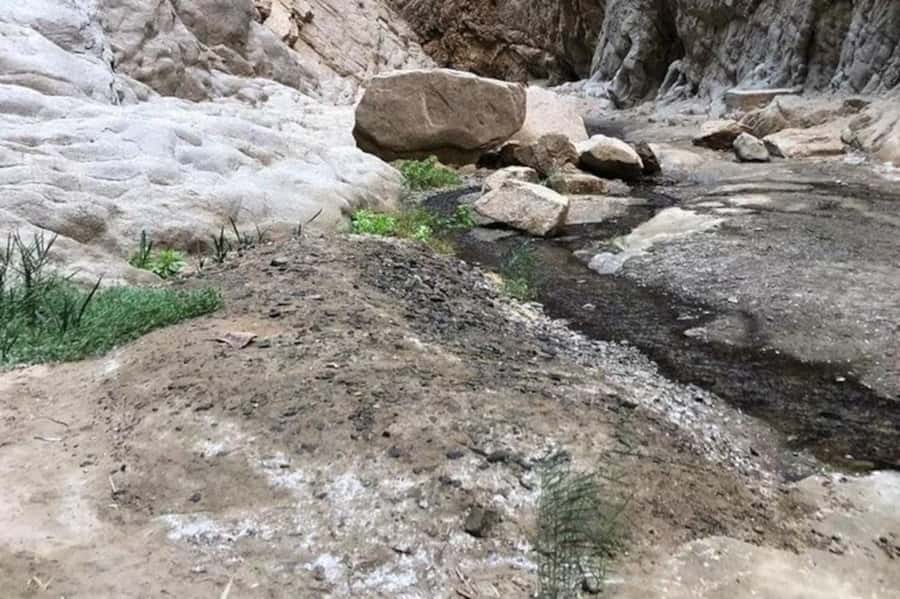
Maqna’s 12 springs of Moses bring water and color into the day. The springs are presented as another location linked to Moses, and they offer a different visual experience from the dry rock formations and red sand.
The contrast is part of the appeal. You may move through an environment that feels stark and sunbaked, then reach a place where water changes the mood completely. The nearby Gulf of Aqaba adds to the scenery, with blue water set against the stone and desert.
The word springs can create different expectations, so keep in mind that this is a natural and historical stop rather than a modern recreation area. The information provided does not promise facilities, swimming, or a developed park. You should visit for the setting and the story, not for a resort-style water activity.
This stop is also a good reason to carry your camera, but protect it from dust and heat. Bottled water is supplied, yet you should drink regularly throughout the day, especially if the weather is warm.
What $575 includes, and what it does not
At $575 per person, this is not a budget excursion. The price makes the most sense if you value privacy, door-to-door service, and a guide who can explain the religious and cultural meaning of each place.
Included in the cost are:
- Private air-conditioned transportation
- Hotel pickup in Tabuk
- Arabic or English guiding
- Necessary permits from the Neom Tourism departments
- Bottled water
- Snacks, coffee, and tea
- All fees and taxes
The permits are a useful inclusion because access rules can matter in developing visitor areas. Having the operator handle the required permissions removes one task from your planning.
Tips for the guide and driver are not included. Plan for that extra cost if you feel the service deserves it. The available feedback gives Salman especially high praise for his patience and personal care, so guide quality may have a real effect on how much value you feel you received.
The price is easier to justify for a solo visitor or a small private party that wants flexibility. If you are comparing it with a large shared bus tour, the cost may feel high. If you want a personal guide, private vehicle, and a full day focused on sites that are difficult to connect independently, the package becomes more reasonable.
Who will enjoy this experience most
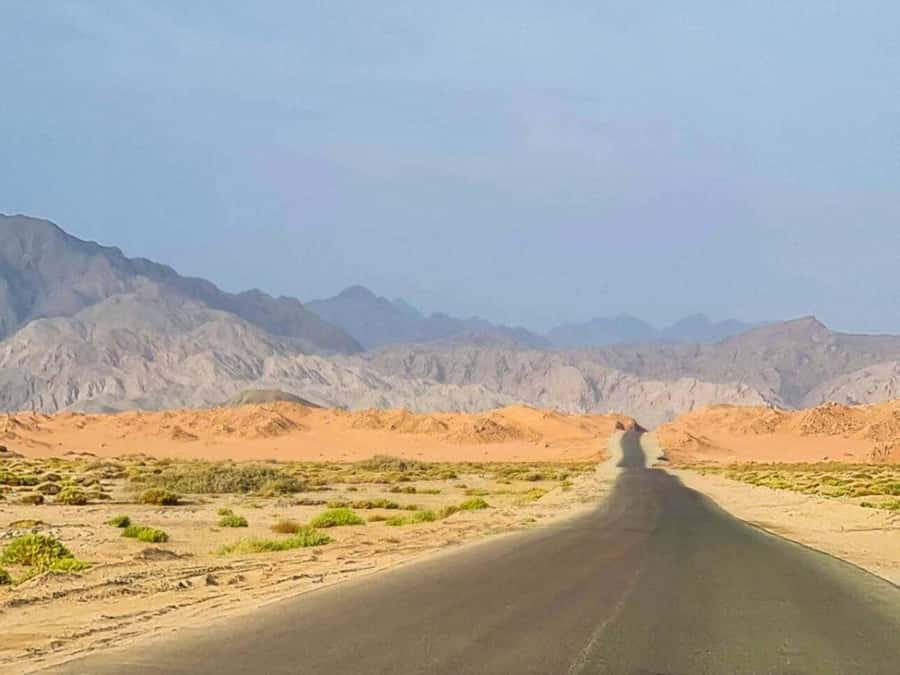
I would recommend this tour to you if religious history, unusual rock formations, and remote scenery are your main reasons for visiting Tabuk. It suits people who prefer an informed guide to a self-guided drive and who want to ask questions along the way.
It is also a strong choice for photographers. The Split Rock, Ship Mountain, caves, springs, Gulf views, and desert colors give you plenty to frame. Just remember that photography should fit around the religious setting, not dominate it.
Families and older visitors should consider the walking requirement carefully. The tour includes a moderate amount of walking, and the information does not promise paved paths or special accessibility arrangements. Comfortable shoes, modest clothing, and protection from the weather are essential.
You should also be comfortable with a day built around stories and sites rather than entertainment. There are no advertised performances, restaurants, shopping stops, or adventure activities. The reward is the place itself and the meaning attached to it.
Useful planning advice for the seven-hour outing
Bring your passport for identification. This is specifically required, and you should not assume that a hotel booking or digital copy will be enough.
Check the forecast before the day begins. The tour moves through exposed outdoor areas, so light, modest clothing, sun protection, and comfortable walking shoes are sensible choices. Dress respectfully for the tomb and other religious locations.
Keep some flexibility in your expectations. The tour duration is seven hours, but the exact order and time spent at each location may depend on conditions and the pace of the day. A private format helps here, since you can take a little longer at a meaningful site.
Free cancellation is available up to 24 hours in advance for a full refund, and you can reserve now and pay later. Those terms are useful when weather or wider Saudi travel plans are still taking shape.
Should you book the Land of Midian tour?
Book it if you want a private, story-led day in one of Saudi Arabia’s most striking regions. The strongest reasons are the unusual mix of Moses-related sites, Prophet Shuaib’s tomb and caves, Jabal Safina, and Maqna’s springs, all handled with transport, permits, refreshments, and a guide.
I would hesitate only if $575 per person is beyond your budget or if you want a highly active outing with little time spent listening. This is a reflective cultural trip, not a thrill ride.
For the best chance of a rewarding day, ask for an English or Arabic guide who will explain each site clearly and allow time for photographs. Salman’s patient approach, including letting his guest stop and absorb every location, is the kind of service that can make the cost feel worthwhile. If that combination of personal attention and ancient desert stories appeals to you, this is a compelling way to see the Tabuk Region.
FAQ
Where does the tour take place?
The tour takes place in the Tabuk Region of Saudi Arabia, visiting sites associated with the ancient Land of Midian.
How long does the tour last?
The tour lasts seven hours.
Is hotel pickup available?
Yes. Pickup is available from wherever you are staying in a hotel in Tabuk.
What languages does the guide speak?
Live guiding is available in Arabic and English.
What is included in the price?
The price includes private air-conditioned transportation, tour guiding, necessary permits from Neom Tourism departments, bottled water, snacks, coffee, tea, fees, and taxes.
Is a passport required?
Yes. You need a passport for identification.
How much walking is involved?
You should be prepared for a moderate amount of walking.
Can I cancel the booking?
Yes. You can cancel up to 24 hours in advance for a full refund. You can also reserve now and pay later.
Just added in Saudi Arabia
- Wadi Lajab Canyon Hiking Tour★ 5.0 · 2 reviews
- Uncover the Rich Heritage of Diriyah, the city of Earth.★ 5.0 · 1 review
- Wadi Disah Adventure (from Tabuk)★ 5.0 · 1 review
- Discover Taif City★ 5.0 · 4 reviews
- Full day Jabal Al Lawz with Biblical Sites visit★ 5.0 · 2 reviews
- Historical Landmark in Tabuk Region Full Day Tour★ 5.0 · 2 reviews
- The Amazing Asfar Lake at Al Ahsa Desert★ 5.0 · 1 review
- Visit Taif The City of Roses★ 5.0 · 2 reviews